Measure would ban anti-LGBT discrimination in Houston

Charter amendment could also allow DP benefits for city workers

DANIEL WILLIAMS  |  Contributing Writer

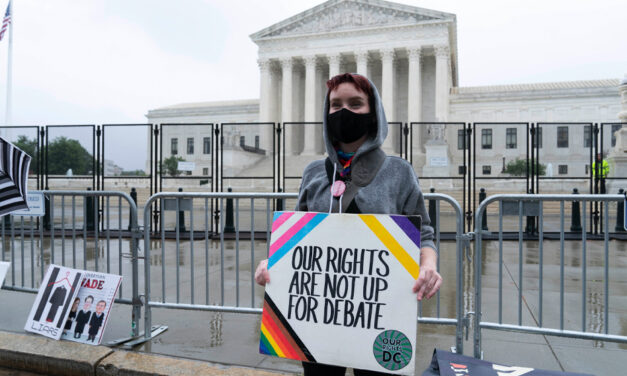
HOUSTON — Long-brewing plans to place a city-wide non-discrimination policy before Houston voters became public this week.

Since December a coalition of organizations and leaders have been working to draft a city charter amendment that would make it illegal to discriminate in housing, employment or public accommodations on the basis of  “age, race, color, creed, religion, national origin, ancestry, disability, marital status, gender, gender identity or expression, sexual orientation, or physical characteristic.”

The amendment would also remove anti-LGBT language added to the Houston city charter in 1985 and 2001 — which could allow the City Council to vote to offer health benefits to the domestic partners of municipal employees.

Houston Mayor Annise Parker, who famously became the only out LGBT person elected mayor of a major American city in 2009, has declined to comment on the proposed charter amendment until the language is finalized. She told the Houston Chronicle: “I believe it’s important for the city of Houston to send a signal to the world that we welcome everybody and that we treat everybody equally, and depending on the elements of what was actually in it, I might or might not support it,”

According to Equality Texas Executive Director Dennis Coleman, the prospect of Houston voters approving the non-discrimination amendment has ramifications for efforts to pass similar measures in the state Legislature.

“Nondiscrimination in Houston builds a better case for us when we go for nondiscrimination in Austin,” said Coleman. “To be able to tell representatives that they represent areas that already support these efforts is very helpful.”

The cities of Austin, Dallas and Fort Worth all already have similar nondiscrimination ordinances and offer DP benefits to employees.

But Houston’s form of governance makes this effort unique. While the City Council is empowered to pass city ordinances covering issues of discrimination, they can be overturned by popular vote if those opposing the ordinance collect 20,000 signatures to place the issue on the ballot.

That was the case in 1985 after Houston Mayor Kathy Whitmire pushed through the council the city’s first protections for gay and lesbian Houstonians (no protections were provided for the bisexual or transgender communities).

A coalition of right-wing voters led by Louie Welch, then president of the Houston Chamber of Commerce, was able to place the issue on a city-wide ballot, claiming the policy “promoted the homosexual lifestyle.” The group also recruited a “straight slate” of candidates to run against City Council members who had favored the protections, with Welch running against Whitmire.

The public vote on nondiscrimination was held in June 1985 and Welch’s forces prevailed, but the city’s temperament had changed by the time of the City Council and mayoral races in November. A comment of Welch’s that the solution to the AIDS crisis was to “shoot the queers” was aired on local TV and few in Houston wished to be associated with him after that. The “straight slate” failed to capture a single City Council seat and Whitmire remained mayor, but the defeat of the city’s nondiscrimination policy remained.

By 1998 Houston had changed: Annise Parker was serving as the city’s first out lesbian city council member and Houston boasted the state’s first out gay judge, John Paul Barnich. Mayor Lee Brown, sensing the change, issued an executive order protecting LGBT city employees from employment discrimination. But the city had not changed that much. Councilman Rob Todd led efforts to fight the order in court, arguing that since voters rejected city-wide protections from discrimination in 1985, it was inappropriate for the mayor to institute them without voter approval. The city spent the next three years defending the policy in court, finally emerging victorious.

The joy of that 2001 victory would be shortlived, however. That year Houston’s voters approved another amendment to the city charter, this time prohibiting the city from providing domestic partner benefits for city employees. In a narrow defeat, just over 51 percent of voters decided that the city should not offer competitive benefits.

The current proposed non-discrimination amendment would remove the language added in 1985 and 2001. While it would provide non-discrimination protections it would not require the city to offer benefits of any kind to the spouses of LGBT city employees, leaving that question back in the hands of the City Council.

The organizers of the current effort are confident that this year is the year for victory.

Noel Freeman, the president of the Houston GLBT Political Caucus, which is spearheading the effort, explains that the previous votes occurred in “non-presidential years,”when voter turnout in general is low, and conservative voters make up a larger percentage of the electorate.

Additionally, polling by Equality Texas in 2010 showed that 80 percent of Houstonians support employment protections for gay and lesbian people.

In order to place the non-discrimination amendment on the November ballot the coalition supporting it will need to collect 20,000 signatures of registered Houston voters and submit them to the city clerk. Freeman says that the final charter amendment language is still under consideration and that once it is finalized the group will begin collecting signatures.

Even former Councilman Todd, who once fought the city’s policy of non-discrimination for LGBT employees, supports the current effort.

This article appeared in the Dallas Voice print edition February 17, 2012.

—  Michael Stephens

Dave Wilson robo-calls Houstonians, warns of Annise Parker’s ‘alternative lifestyle’

Houston mayoral candidate Dave Wilson has stepped up his homophobic attacks against incumbent Mayor Annise Parker with a recent robo-call targeting Houston voters:

“Hello Houstonians, this is Dave Wilson, candidate for mayor. In 2009 I warned voters that Annise Parker would use her position to promote her alternative lifestyle, and she’s done that. Her very first executive order was to allow men dressed as women to use the women’s restroom. Her appointments have been based on sexual orientation, rather than ability. She appointed George Greanias, head of Metro, who was caught viewing porn sites such as rentaboy.com. Dave Wilson would have fired him on the spot. Join me in taking our city back, vote Dave Wilson, paid for by the Dave Wilson for Mayor.”

Wilson’s call contains several misleading, or outright false, claims, such as saying that Parker’s first executive order was to allow “men dressed as women to use the women’s restroom.” The first executive order Parker signed after being sworn in (E.O. #1-50), clarified the process for filing sexual harassment claims for city employees. The second (E.O #1-25) dealt with city operations during a natural disaster, the third (E.O. #1-42) with city credit cards, and the fourth (E.O. 1-14) with the city’s procurement procedure. The fifth and sixth executive orders signed by Parker (E.O. 1-8 and E.O. 1-20) dealt with discrimination on the basis of sexual orientation or gender identity and expression and the use of hate language by City of Houston employees while on the job. Both order were signed on March 25, 2011, 2 months and 23 days after Parker took office. These are is the ones that chafe Wilson. Under order 1-20 access to public accommodations in city buildings, including restrooms, cannot be denied to any member of the public because they are LGBT. While Wilson fears “men in dresses” discretely handling their business in the stall next to his wife, he seems to miss that it also allows burly, bearded men who happened to have been assigned a female identity at birth to use the men’s room. One wonders if he’s ever thought about that.

Executive Order 1-20 is about basic courtesy and access to public facilities that most of us take for granted. No one should be put in the position of risking arrest for using a public restroom (which happened shortly after E.O. 1-20 went into effect), and it is humiliating to expect trans Houstonians to have to ask “which bathroom do you expect me to use” every time they’re in a city building.

The situation with George Greanias, CEO of Houston’s public transit system Metro, is far more complicated than Wilson describes it. To hear the robo-call you’d think Greanias was simply caught looking at pornography, a constitutionally protected right. The issue is that Greanias was caught looking at porn on Metro’s internet wi-fi, all be it accidentally. According to the Metro investigation Greanias accessed sites containing gay oriented adult material on 14 separate days between February 9, 2011 to July 1, 2011. The access was from Greanias’ personal computer and he believed through his personal internet access. In a letter to Metro employees he explained that “the violation was unintentional. I thought I was using my own computer, but was in fact in Metro’s system — but it was a violation all the same. The sites I accessed were of a sexual nature — to say the least, highly inappropriate, and embarrassing.”

Typically a violation of this nature by a Metro employee would have resulted in a verbal warning. Because of the high profile nature of Greanias’ job he received a much harsher punishment. According to Metro’s official statement “Chairman Gilbert Garcia has concluded that, as president and CEO, Mr. Greanias must be held to a higher standard, and decided instead of a warning Mr. Greanias would receive a more stringent punishment of one week suspension, without pay.”

None of that matters to Wilson. He “would have fired [Greanias] on the spot,” bypassing the review process guaranteed to all Metro employees and likely subjecting the city to a very expensive lawsuit. More than his overt homophobia, it’s Wilson’s blind ignorance of the procedural facts of running a city that should frighten Houstonians.

Early voting in Houston municipal elections (including mayor) continues through Nov. 3 at all early voting locations. Election day is Nov. 8. Early voting turnout continues to lag; votes cast during the first four days of voting have trailed the 2009 municipal election turnout by 21%.

—  admin

Langbehn receives citizens medal at White House

Janice Langbehn, left with President Barack Obama

Janice Langbehn was among 13 recipients of a citizens medal awarded by President Barack Obama on Oct. 20. She was chosen from among thousands of nominations. As a result of her experience of being denied access to her dying partner, the president issued an executive order requiring hospitals to allow gays and lesbians to name a partner as family for visitation and to make medical decisions.

From an email sent to Dallas Voice by the White House:

Janice Langbehn, Lacey, WA
While on vacation with her family in February 2007, Janice Langbehn’s partner, Lisa Pond, suddenly fell ill and was rushed to the hospital. Langbehn was refused access to her partner, who had experienced a brain aneurysm and later died alone. With the help of Lambda Legal and GLAAD, she filed a federal lawsuit and worked to get her story out to the nation. Janice’s story received attention from President Obama, who personally apologized to her for the way she and her family was treated. He went on to revise hospital visitation rights for gay and lesbian couples, which went into effect this past January for any hospitals receiving federal Medicare or Medicaid funds. Langbehn receives the Citizens Medal for her efforts to ensure all Americans are treated equally.

—  David Taffet

Baylor updates its definition of family, sort of

Earlier this year, an executive order from President Barack Obama went into effect requiring hospitals to allow same-sex partner visitation.

This week, the Baylor Health Care System sent a memo to its employees explaining its new policy. A copy of the memo was obtained by Instant Tea. While the policy doesn’t specifically address LGBT families, it allows patients to define who their families are.

It doesn’t appear as though the new policy will have any impact on the Baylor-owned Tom Landry Fitness Center, which refuses to sell family memberships to same-sex couples. But here’s what the Health Care System wrote:

Beginning in January, Baylor began asking inpatients System-wide to specify who they consider “family” to support them during their stay. The goal: to implement open access in all inpatient units, outpatient departments, critical care units and emergency departments System-wide during FY11.

Why Open Access?

·         Significant evidence-based literature supports the benefits of family presence for patients.

·         Benefits include reduced anxiety, improved outcomes, reduced lengths of stay, better discharge planning and fewer re-hospitalizations.

·         Having loved ones help manage the flow of information and learning heightens the patient’s confidence and compliance with recommendations.

The Centers for Medicare and Medicaid and The Joint Commission require that patients be afforded the right to have a support person during their stay unless it infringes on others’ rights or safety or is medically or therapeutically contraindicated.

What is the Support Person’s Role?

·       Patients have the right to define a support person and decide how he or she will be involved in care, care planning and decision-making.

·       Involvement may include participation in shift report, rounds and private consultation as long as confidential health information is shared only with the patient’s consent.

We appreciate your support at Baylor continues its journey toward a patient- and family-centered model and implements open access across the System.

—  David Taffet

Hospital visitation rules take effect

Parkland Hospital

An executive order saying hospitals that receive federal funding must allow same-sex visitation went into effect on Tuesday.

Federal funding includes Medicare and Medicaid payments.

President Barack Obama issued the order last year after hearing about a case in which a woman wasn’t allowed to see her partner before she died.

“We applaud the Obama administration’s steps to address the discrimination affecting LGBT patients and their families,” Lambda Legal Executive Director Kevin Cathcart said in a statement. “Now, in hospitals across the nation, LGBT people and their families will have more protections so they can be by their loved one’s side when they are sick and need them most.”

The city of Dallas has an ordinance prohibiting discrimination on the basis of sexual orientation in housing, employment and public accommodations. Partners in Dallas should have access based on public accommodations, and no complaints against a Dallas hospital has been filed since the ordinance went into effect.

Hospitals in other cities that prevented partners from visiting loved ones used the excuse that only immediate family members could visit.

I contacted several area hospitals for comment and heard back from Parkland.

“Parkland will continue to offer an open visitation policy to all patients and their family members. Research has shown that patient care is greatly enhanced by the more time a family spends with the patient,” said Miriam Sibley, Parkland’s senior vice president and chief nursing officer.

I thought this was interesting wording. While that same wording has been used elsewhere to exclude people, at Parkland it’s meant to express acceptance of same-sex partners as family that is — and has been — welcome.

The full Lambda Legal press release is after the jump.

—  David Taffet

SLDN: ‘The job is not done’

Aubrey Sarvis

This open letter addressed to servicemembers, the LGBT community and allies just came across from Aubrey Sarvis, an Army veteran who serves as executive director of the Servicemembers Legal Defense Network:

Dear Friend,

With the President signing legislation into law that provides a pathway to repeal, the SLDN family and greater LGBT community, along with our allies, should be proud of the role each person played in making history. But the job is not done.

Troops remain at risk under the law. Our service member hotline has not silenced. Since the President signed legislation, 135 service members and veterans have contacted our legal team for help. “Don’t Ask, Don’t Tell” will remain the law until certification and the 60-day implementation period have been completed.

While a measure of dignity has been restored to thousands of service members on active duty, and to over a million gay and lesbian veterans who served in silence – the uncertainty and fear in the ranks remains. Our mission and our services will continue: securing the freedom for all qualified to serve in the U.S. military with equality of treatment and opportunity.

We all know there is vital work unfinished.

—  John Wright

Questions arise over FW trans ordinance

Double negative included in addition to protections adopted last year could bar trans from using gender-specific restrooms

DAVID TAFFET  |  Staff Writer taffet@dallasvoice.com

Lisa Thomas
Lisa Thomas

FORT WORTH — A double negative in one sentence of an addition to the nondiscrimination protections in the Fort Worth ordinance would enshrine one form of bias against transgenders.

Proposed Section 17-48 (b) says “It shall not be unlawful for any person or any employee or agent thereof to deny any person entry into any restroom, shower room, bathhouse or similar facility which has been designated for use by persons of the opposite sex.”

Fort Worth assistant attorney Gerald Pruitt confirmed that, as written, the clause allows anyone to deny a transgender person presenting as one sex entry into a restroom if that person has not completed transition.

The concern among members of the transgender community stems from an incident in which a transgender woman was arrested in Houston for using a women’s restroom in a public library.

Earlier this year, Mayor Annise Parker issued an executive order that prohibited that form of discrimination, allowing transgenders to use whichever restroom they feel is appropriate in any city facility. The library would have been included in Parker’s order.

The November arrest contradicted the order but the action was against earlier laws already on the books.

“We have a number of transgender employees in Fort Worth,” Pruitt said. “I have no knowledge of any action like this ever being taken.”

He said that a situation arose about five years ago when someone began transitioning on the job. Someone who had been male was suddenly presenting as female and began using the woman’s room, he said.

“I think that’s where most of the angst is,” he said, explaining that someone everyone knew as a man began using the women’s restroom.

Pruitt said that the solution that satisfied everyone was that a bathroom convenient to the trans woman’s office was designated as her private restroom.

But he denied that this particular clause was in reaction to the Houston case, which he said he had not heard about before. And he said that as far as he knew, the wording was correct.

Tom Anable at Fairness Fort Worth was concerned about that one clause. He wondered why, if something was described as “not unlawful,” it would have been listed under the heading “unlawful acts.”

“I have sent it to staff at [the Human Rights Campaign] to ask for input on this,” Anable said.

Lisa Thomas, appointed to Fort Worth’s Human Rights Commission by Councilmember Joel Burns, said she had been “made aware of this discrepancy.”

“I’ve asked the chair and administrator of the commission to investigate what is the intent of these words, knowing it is not the intent to bar admission to restrooms,” Thomas said.

She said that in all discussions in the city, the intent has been not to discriminate.

“But we have to make sure we are all in alignment and right now it doesn’t seem like we are,” she said.

Tom Anable
Tom Anable

Section 17-48 (a) (1) adds language that bars discrimination against transgender persons. “Sexual orientation, transgender, gender identity or gender expression” are added to race, color, religion, sex, national origin, disability and age as protected categories.

No “person, employee or agent” may deny anyone “advantages, facilities or services” that Section states. So section (a) (1) contradicts Section (b) since the second section does deny admission to facilities.

Section 17-48 (a) (2) makes it illegal to deny anyone admission or expel someone from a place of public accommodation “for alleged non-compliance with a dress code.”

Exemptions to the ordinance include any facility whose services are restricted to members and their guests, religious organizations, private day cares, kindergartens or nursery schools.

But that exemption applies equally to ability to discriminate based on race or religion as sexual orientation or gender identity.

Again, section (a) (2) contradicts Section (b) because admission is denied.

Violating any provision of the code is a misdemeanor. So presumably, any person discriminating against a transgender person by refusing to allow them to use a specific restroom would be charged with a misdemeanor.

The word “not” may have been placed in the sentence by mistake. If so, these additions have not been adopted yet and may be changed before the city council votes on them.

This article appeared in the Dallas Voice print edition December 17, 2010.

—  Michael Stephens

WATCH: Transgender woman arrested for entering women’s bathroom at Houston library

KTRK reports that a preoperative transgender woman in Houston was arrested last week for using the women’s restroom at the city’s main library.

The woman’s arrest appears to conflict with the city’s nondiscrimination policy, enacted by Mayor Annise Parker earlier this year, which permits people to use restrooms according to their gender identity, regardless of their biological sex.

Tyjnae Moore pleaded guilty to “knowingly entering a restroom of the opposite sex” and spent two nights in jail before being given credit for time served.

Tyjnae Moore

Right-wingers have long used the restroom issue to fight discrimination protections for transgender people. So it’s hardly surprising that the Houston Area Pastors Council is seizing upon this incident, even though there’s no indication that the woman was acting inappropriately. From KRTK:

Earlier this year, Houston Mayor Annise Parker expanded an anti-discrimination executive order that allowed city employees to use restrooms based on their gender identity. But it’s unclear if that order conflicts with existing city statute. It’s one reason why the conservative Houston Area Pastor Council has asked the attorney general for an opinion.

“It’s the sort of legal and moral confusion we fully expected to take place and shows why it’s a bad public policy. It needs to be reversed because there is no legal standard of what gender identity means,” said Dave Welch of the Houston Area Pastor Council. …

The mayor’s office issued a statement Monday evening saying, “There appears to be a misunderstanding regarding applicability of my executive order and we need to clarify that. This is a matter of providing practical solutions in a diverse city. It is not about behavior. Where there is inappropriate behavior, there will be enforcement.”

UPDATE: The Houston-based Transgender Foundation of America issued the below statement late Monday. Also, Darrell Steidley, who is lead counsel in the Nikki Araguz case and a partner in Phyllis Frye’s law firm, debates the issue with Dave Welch of the Houston Area Pastors Council in the video below.

Houston, TX – November 22, 2010 – A young male-to-female transgender library patron named Tyjnae Moore was arrested and taken to jail on November 17 because she, in accordance with the Houston City Ordinance, used the female bathroom at the Jesse H. Jones Library in downtown Houston.  A Houston Library security guard initiated the incident by informing an HPD officer that, “a man [sic] is in the restroom.” The arresting officer took the patron to jail for the alleged offense of violating a State of Texas law which states, “It is unlawful for any person to use a restroom of the opposite sex unless given permission…”

City of Houston Executive Order 1 – 8 and 1 – 20 ensures that all individuals regardless of race, gender identity, nationality or sexuality can have equal access to City restroom facilities. “The arrest should have never happened.” said Cristan Williams, Executive Director of the Transgender Foundation of America. “The City of Houston has given this victim explicit permission to use a restroom consistent with their gender.  This means that the library patron was acting in a manner consistent with both state and local law. Since she broke no law, this is a case of unlawful arrest and imprisonment.”

The victim, a native of Minnesota, states that she will be leaving Texas as soon as she can. She states that this is the second time she has been harassed by Houston police.

—  John Wright

DFW International Airport adds LGBT protections

The front door to North Texas just became a little more welcoming for the LGBT community.

DFW International Airport, one of the largest and busiest airports in the world, has adopted new policies protecting its employees from discrimination and harassment based on sexual orientation and gender identity.

Rafael McDonnell, strategic communications and programs manager for Resource Center Dallas, said the policies took effect today after RCD representatives first approached DFW International Airport officials several months ago. Sexual orientation and gender identity were added to the airport’s nondiscrimination and anti-harassment policies by executive order, and the changes didn’t require approval from the airport’s board.

DFW International Airport has about 1,700 employees.

“Both Dallas and Fort Worth have nondiscrimination policies that cover sexual orientation and gender identity,” McDonnell told Instant Tea. “It’s not something revolutionary or new. The two city owners, for lack of a better term, already provide these protections.

“They refer to DFW as the economic engine of the region. You talk to tourism people, and they refer to DFW as the front door to the region, so this is vitally important.”

McDonnell said convincing airport officials to add LGBT employment protections was a collaborative effort between representatives from Resource Center Dallas and Fairness Fort Worth.

In addition to the cities of Dallas and Fort Worth, the airport’s six top carriers, as well as numerous hotel and rental car companies that serve the facility, have LGBT-inclusive nondiscrimination policies, he said.

To read the new policies, click here.

—  John Wright

Early voting begins today for midterm elections, with plenty at stake for the LGBT community

Many LGBT advocates and activists were thrilled two years ago when Barack Obama — a man who said he supported legal federal recognition of same-sex civil unions, passage of the Employment Non-Discrimination Act and repeal of the military’s “don’t ask, don’t tell” and who pledged to be a “fierce advocate” for the LGBT community — was elected president.

Since President Obama was taking office at a time when the Democratic Party — which tends to be, overall, more progressive on LGBT issues — controlled both the U.S. House and the U.S. Senate, LGBT advocates were looking forward to seeing big progress very quickly. And in fact, Obama has included a number of LGBT and LGBT-supportive individiuals in his administration. He did issue an executive order that granted partner benefits to LGBT federal employees. He did sign into law the Matthew Shepard and James Byrd Jr. Hate Crimes Law (one of the top priority issues on the LGBT community’s list for several years).

But many of those same activists who were so tickled to see Obama elected have begun losing faith that the president has a real commitment to LGBT equality. ENDA continues to languish. Repeal of DADT went down in flames in the Senate and lesbian and gay servicemembers continue to be discharged. And the Department of Justice, under the Obama administration, has continued to appeal court rulings favorable to the LGBT community on issues like DADT and the Defense of Marriage Act.

Perhaps, many feel, the “fierce advocate” isn’t so fiercely on our side, after all. And yet, would a Republican-controlled Congress make it any easier to get our issues fairly addressed? Democrats warn that not only would we make no further progress with the Republicans in charge, we might also lose some of advances we have made so far.

However you feel about it, the midterm elections next month will undoubtedly have a huge impact on the future of efforts like passage of ENDA and DADT. Many pundits expect the Republicans to win control of at least the House of Representatives, if not both the House AND the Senate.

And that’s not even taking into account the importance of races from the county level on up to the state level, where Republican incumbent Rick Perry is fighting a hard battle against Democratic challenger Bill White in the race for Texas governor. And what about the Texas Legislature? Will the LGBT community have enough allies there to pass a safe schools bill that would address anti-gay bullying, or to at least fend off recurring efforts to keep same-sex couples from adopting or being foster parents?

Those are just a few of the races that will be determined in this election, and all of them impact our community in some way. And your vote can make the difference when it comes to who will represent you in county, state and federal government.

Election Day isn’t until Nov. 2. But early voting starts today. Dallas Morning News reported today that Dallas County residents appear to be voting at a higher pace than the last midterm elections four years ago, and that Dallas County Elections Administrator Bruce Sherbet is predicting an overall turnout of about 40 percent this year.

So why not go on and vote now and avoid the Election Day rush?

Do you need to know where to go to early vote? Are you wondering which precinct or district you are in? Do you know if your voter’s registration is still valid? There are online sites that can help.

If you live in Dallas County, go here for information on early voting sites and hours and for information about who represents you, specifically, at the county, state and federal levels. That same information is available for Tarrant County residents here. The state of Texas also has a site with information for voters, and you can find it here.

And if you don’t live in Dallas or Tarrant counties, just do a search online for your county’s elections site.

Remember, our government is supposed to be “of the people, by the people and for the people.” But if you want your voice to count, then you have to vote.

—  admin