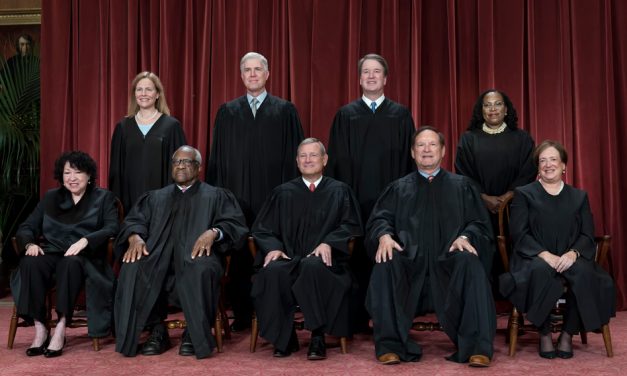
Anybody expecting to get some hint of resolution to the redistricting battle raging here in Texas following oral arguments over the issue today before the U.S. Supreme Court is probably disappointed, as it seems the justices want to see the Texas primary elections, already postponed from March to April 3, pushed back to an even later date.
According Associated Press legal affairs reporter Mark Sherman (as quoted on the Fort Worth Star-Telegram’s blog, PoliTex), “The justices discussed moving the primary date back further to give the courts handling different aspects of the case more time. ‘Why can’t this all be pushed back, and wouldn’t that eliminate a lot of the problems we are grappling with in this case?’ Justice Samuel Alito asked.”
And TheHill.com indicates that justices were not happy with either the map drawn last year by the GOP-controlled Texas Legislature or with the interim map drawn last month by federal judges in San Antonio, quoting Chief Justice John Roberts as saying during today’s hearing, “How do you decide between two wrong choices?”
TheHill.com also said, “Most justices indicated they thought both maps were unacceptable and could not be put into law without violating the Voting Rights Act.”
The Legislature’s map favors Republicans, especially in Tarrant County where Democratic state Sen. Wendy Davis saw her district taken away, with portions of it allocated to more Republican-leaning areas north and south of Fort Worth.


Yes, yes. Sorry, to tell you that. … But, you know, if indeed the current society has come to different views, that’s fine. You do not need the Constitution to reflect the wishes of the current society. Certainly the Constitution does not require discrimination on the basis of sex. The only issue is whether it prohibits it. It doesn’t. Nobody ever thought that that’s what it meant. Nobody ever voted for that. If the current society wants to outlaw discrimination by sex, hey we have things called legislatures, and they enact things called laws. You don’t need a constitution to keep things up-to-date. All you need is a legislature and a ballot box. You don’t like the death penalty anymore, that’s fine. You want a right to abortion? There’s nothing in the Constitution about that. But that doesn’t mean you cannot prohibit it. Persuade your fellow citizens it’s a good idea and pass a law. That’s what democracy is all about. It’s not about nine superannuated judges who have been there too long, imposing these demands on society.