Dallas County HIV testing announced for National Black HIV Awareness Day

AIDS Dallas County

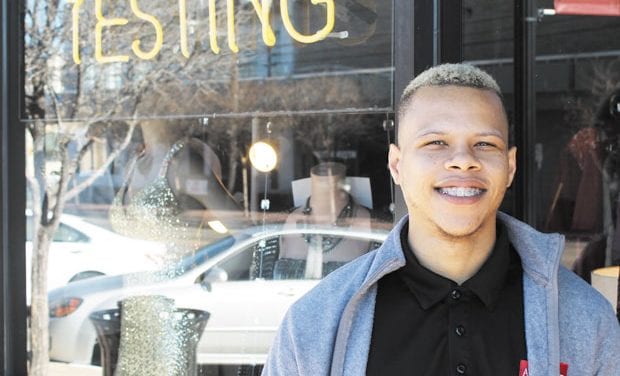
Dallas County is offering free HIV testing on Thursday at multiple sites in honor of National Black HIV/AIDS Awareness Day.

National Black HIV/AIDS Awareness Day is a national HIV testing and treatment mobilization effort targeting the black community, which accounts for 44 percent of all new cases of HIV in the U.S.

According to the latest Dallas County statistics, for 2011, almost 13,500 people were living with HIV in the county, and 5,482 of those were African-American.

“Knowing your HIV status is a great benefit to individuals and to our community as a whole,” county Health and Human Services Director Zachary Thompson said. “Having this knowledge allows people to make better decisions about their health in the future. Residents have multiple opportunities to get tested for free.”

Testing locations are:

—  David Taffet

Wait time for Amelia Court appointments questioned

ASOs strive to see more clients more quickly but, Parkland patients continue to wait months

Nobles1

Raeline Nobles

DAVID TAFFET  |  Staff Writer
taffet@dallasvoice.com

Over the past year, the wait time to get an appointment at Parkland hospital’s Amelia Court appears to have gotten longer, although the staffing level appears to be about the same now as a year ago.

During that same time, community-based AIDS agencies in Dallas say they have expanded services and decreased wait times.

For new Parkland patients, the time from first contact to seeing a doctor can be as short as two weeks. But new patients trying to access services at the public clinic recently have reported waits of as long as four months.

Candace White, Parkland media spokeswoman, said that the clinic is taking new patient appointments as early as February and through March 1. She said she confirmed that with Sylvia Moreno, the hospital’s director of HIV services.

White attributed the delay to an increase in the number of patients accessing the clinic’s services due to successful HIV testing efforts throughout Dallas County. Some of the longer wait times quoted over the past few weeks may have been due to the holiday, she said.

However, when a Dallas Voice staff member called Amelia Court on Tuesday, Jan. 10, to make an appointment, he was transferred to voicemail to leave a message. As of deadline time on Thursday, Jan. 12, more than two days later, no one from the clinic had returned the call.

Another caller to Amelia Court was told that those February and March appointments White cited are reserved for established patients only. The next available appointment for first intake for new clients who want access to Amelia Court is April 23, the caller was told.

The Ryan White CARE Act, which funds many of the treatment programs for persons with HIV, specifies patients must receive “access to care within three weeks of presenting,” Dr. Gary Sinclair, former medical director of Amelia Court, said.

While he was at Amelia Court, Sinclair said that he and his staff reduced the waiting time to access medical care to two weeks. He left UT Southwestern and Parkland two years ago and is now an independent consultant involved in covering for physicians for Ryan White programs.

For years, all Parkland primary AIDS care was done at Amelia Court, located on Harry Hines Boulevard, a block from the main hospital. However, to relieve overcrowding at Amelia Court, doctors with experience in treating people with the virus have been seeing patients at three of the hospital’s Community Oriented Primary Care facilities in Dallas.

Parkland began opening the COPCs in 1987 to relieve its main emergency room of treating non-emergency cases.

The clinics were designed to provide convenient and affordable healthcare throughout Dallas County.

Parkland

HIGH RISE CLINIC | Amelia Court’s HIV services will move to the new Parkland Hospital under construction across Harry Hines Boulevard from the old facility. (DavidTaffet/Dallas Voice)

Some of the facilities also have specialties. Two clinics — Bluitt-Flowers Health Center in South Dallas and Southeast Dallas Health Center in Pleasant Grove — were designated as HIV treatment sites.

A third — deHaro-Saldivar Health Center in Oak Cliff — previously treated adolescents and young adults with HIV, but that service has been discontinued.

Parkland’s clinic has been staffed at about the same level for the past several years.

But as HIV has changed to a manageable chronic illness, Sinclair said that there has been “a normalization of care.”

That normalization may include longer waiting times for appointments at the public hospital, something that is common in other specializations.

But while Parkland strives to keep the wait time for primary care down, some local agencies that provide clinical service to people with HIV at low or no cost say they have expanded their service and will see new patients quickly.

“On a very human level, it can be quite terrifying to want and need medical care and not be able to find it,” AIDS Arms Executive Director Raeline Nobles said. “AIDS Arms built its second HIV clinic to help with these exact problems in significant and positive ways.”

The agency opened Trinity Health & Wellness Clinic in Oak Cliff this past fall and continues operating Peabody Health Center in South Dallas. Both offer full primary care for people with HIV.

AIDS Arms accepts Medicare and Medicaid as well as private health insurance. And like the county hospital, medical care is free for low-income people without any coverage and is provided on a sliding-scale for others.

Intake takes about a week to complete, Nobles said. Once a person who has an HIV-positive diagnosis is registered as a client, doctors at Trinity Clinic can see a new patient that week.

“With fast access to medical appointments at our Trinity and Peabody clinics and five licensed providers, we are a partner in the solution to very large and disturbing access to care problems in our community,” Nobles said.

The agency is seeking to expand the services it offers its patients and is currently looking for specialists in ophthalmology, cardiology and renal care to supplement its care.

In addition, AIDS Arms is involved in drug research trials, something Amelia Court no longer does.

Sinclair said he believed that was part of a shift in federal research dollars away from “’How do we treat people?’ to ‘How do we eliminate the epidemic?’”

In addition, AIDS Arms is offering several new services to its patients at its Trinity clinic.

Legal Hospice of Texas will soon begin providing on-site legal assistance for disability, social security and HIV-related discrimination issues. Bryan’s House will be providing free childcare for patients visiting the clinic on Thursday and Fridays beginning next week. And once a week, onsite psychotherapy services will be offered.

Resource Center Dallas offers a variety of specialized medical services at its Nelson-Tebedo Community Clinic on Cedar Springs Road. Dental care is the most frequently accessed and something not provided by other agencies or Parkland.

With a recent expansion of facilities at the clinic, RCD Communications and Advocacy Manager Rafael McDonnell said the wait time for an appointment is three weeks or less. He said the clinic is able to treat emergencies even more quickly.

This article appeared in the Dallas Voice print edition January 13, 2012.

—  Kevin Thomas

25 ways to fight AIDS

Today, December 1, is World AIDS Day.

Wait! Before you click the ‘next’ button or scroll down your news feed hear me out: The LGBT community has been living with AIDS for three decades now. For people of my generation the message to get tested and use condoms has been stated and restated so many times that it has faded into the background with the result that, all too often, people do not take the steps they need to to protect themselves. Harris County is responsible for 30% of the new HIV/AIDS diagnosis in Texas and men who have sex with men account for 64% of newly diagnosed men statewide. The threat is not over, the fight is not over, AIDS still endanger the LGBT community.

But I don’t want to just talk about just condoms and testing (as important as they are). Fighting HIV/AIDS is easier than you might think. I present to you 25 ways, in no particular order, to fight AIDS in Houston.

25. If you’re over a certain age talk to a young LGBT person about how your life has been affected by HIV/AIDS. You might be surprised how eager we are to hear your stories.

24. If you’re under a certain age listen to an older LGBT person tell you how HIV/AIDS has affected their lives. I know you aren’t eager to hear their stories, but listen anyway. You may find that learning the history of your community is more empowering than you’d expect.

23. If you are a sexually active gay man or transgender woman participate in the Baylor College of Medicine’s HIV Vaccine Study.

22. Ask your local public or school library to put books about HIV/AIDS on the shelf, not just in the back room where they have to be requested. Access to accurate information is crucial in fighting the spread of the disease.

21. Post HIV/AIDS stories to facebook.

20. Ask your clergy person what your community of faith is doing to fight the pandemic.

19. Sign up for action alerts from the Texas HIV/AIDS Coalition at texashiv.org

18. Actually follow through when the action alerts from the Texas HIV/AIDS Coalition arrive in your in-box.

17. Volunteer for organizations that deal with communities at high risk for infection: high school dropouts, victims of sexual assault, the poor, the homeless and sex workers. Fighting AIDS means fighting the injustice in our society that all too often contributes to new infections.

16. Say AIDS out loud.

15. Ask political candidates what they will do to continue funding to fight HIV/AIDS.

14. Once they’re elected, ask those candidates why they aren’t doing more to continue funding to fight HIV/AIDS.

13. Remind yourself that it’s OK to be tired of hearing about HIV/AIDS.

12. Thank a person who volunteers their time to the fight.

11. Take a moment to remember the people we’ve lost.

10. Take a moment to think of the people we may loose if this pandemic isn’t stopped.

9. Take a HIV/AIDS healthcare worker to dinner.

8. Wear a red ribbon.

7. Recognize that wearing a red ribbon isn’t enough.

6. Work with communities other than your own. HIV/AIDS effects us all.

5. Get angry.

4. Get over your anger.

3. Donate to an HIV/AIDS Charity.

2. When you pass a mobile HIV testing center, thank the workers.

1. Don’t pretend the fight is over, and don’t let other people pretend it’s over either.

—  admin

RCD to begin Saturday HIV testing program

STD testing will be offered during new testing hours including free syphilis screening

DAVID TAFFET  |  Staff Writer
taffet@dallasvoice.com

Through a partnership with the Texas Department of State Health Services, Resource Center Dallas will begin HIV and STD testing on Saturdays from 10 a.m. to 4 p.m. beginning May 21, RCD officials announced this week

Testing will be offered at the Nelson-Tebedo Community Clinic, 4012 Cedar Springs Road.

A rapid test will offer HIV results within 20 minutes. That will be confirmed through a Nucleic Acid Amplification Testing that can detect HIV as soon as 14 days after infection. The rapid test window of detection is about three months after infection.

Last year, 30 NAAT tests given at Nelson-Tebedo confirmed HIV that rapid testing did not detect. That was out of about 3,000 tests given in 2010, or 1 percent.

Bret Camp, associate executive director for health and medical services at Resource Center Dallas, said results from the NAAT test take a week and so does testing for other STDs.

Testing for syphilis is free but there is a fee for other STD tests which include chlamydia, gonorrhea and human papillomavirus. Confidential HIV testing is free. Anonymous testing through a unique identifier is at a small charge.

All results are given in person.

Although walk-ins for Saturday testing are accepted, Camp said that appointments are encouraged.

“By adding these Saturday testing hours, it will now be more convenient than ever to take charge of your health,” Camp said.

—  John Wright

Melissa Grove of Legacy Counseling is this week’s guest on KNON’s ‘Lambda Weekly’

Melissa Grove

Melissa Grove, executive director of Legacy Counseling Center, will be the guest this week on Lambda Weekly. She will discuss the fear of HIV testing and the psychological side of revealing your status.

Lambda Weekly, the longest-running LGBT radio show on the air in the country, is now heard on Wednesdays at 7 a.m. on 89.3 KNON-FM and online at KNON.org. The show had been on Sundays since it premiered in 1983.

—  David Taffet

HIV meds program on state’s chopping block

Ending assistance could cost communities millions in added ER care and hospitalization, advocates say

DAVID TAFFET | Staff Writer
taffet@dallasvoice.com

Some of the more extreme budget cutters would like to eliminate the program that helps people without insurance receive life-sustaining medications, as the Texas Legislature struggles to pass a balanced budget.

“That would be called legalized murder,” said Don Maison, president and CEO of AIDS Services Dallas.

Among the more likely proposals being floated in Austin is to add only 400 to 500 people to the Texas HIV Medication Program (THMP) over the next two budget cycles, which runs four years.

Bret Camp

Local HIV healthcare providers said the proposed number is low compared to the number who will need the program.

Texas is a direct purchase state, according to Bret Camp, associate executive director of health and medical services for the Nelson-Tebedo Clinic at Resource Center Dallas. Camp explained that the state buys HIV medications and distributes them through a network of about 400 pharmacies throughout the state.

To qualify for THMP, a client must be diagnosed HIV-positive, be a Texas resident, be uninsured or under-insured for drug coverage, have income below 200 percent of the poverty level, and not receive Medicare.

Medicare recipients get their medication through the State Pharmacy Assistance Program.

In 1996, 5,100 people in Texas received their medication through THMP. Last year, the estimated number was 14,000.

Camp said he is concerned that increasing the number of eligible people over the next four years by just 400 would leave too many without the medications they need.

Camp said he expects the number of people needing assistance to increase significantly.

“The state is being responsible and promoting HIV testing,” he said. “The more testing, the more cases we’re likely to see.”

Just how much the state is spending on providing drugs for about 14,000 Texans with HIV is not known. Camp said that the state negotiates a price with the drug companies but does not publish the negotiated price.

“Nobody really knows what the price is,” Camp said.

Randall Ellis is the senior director of government relations for Legacy Community Health Services in Houston, formerly known as Montrose Clinic. He said that Texas probably pays in the range of $6,000 per year for someone in the program.

Individuals who have to purchase the drugs themselves or have insurance cover part of the price would pay closer to $24,000 or more.

Camp said that eliminating the program would save little when compared to the overall budget shortfall. But he said that the cost of caring for people who would have to make multiple emergency room visits and have extended hospital stays would be much higher than keeping them healthy in the first place.

Ellis said another problem is that the oversight committee, made up of stakeholders from around the state, sunsetted last fall. To reinstate the committee, the commissioner of Health and Human Services would simply have to repost the rules.

The committee made recommendations to the health department such as what drugs should be included in the program and what the eligibility requirements should be.

The commissioner, Ellis said, usually followed the committee’s recommendations. But the commissioner didn’t always want that input, he said.

“They want our input when it looks good to have community input,” Ellis said. “But when we ask tough questions, they’d rather not have us.”

Ellis does not expect all funding for THMP to be cut. He said that the state receives some funding through the federal AIDS Drug Assistance Program.

Camp said other states have thousands of people on waiting lists for ADAP programs.

“Florida is sorry right now,” he said. “They have dis-enrolled people.”

Florida has more than 3,000 waiting for medication. Unless those people find another way to get their medication, most will become sick, Ellis said, adding that if they are left untreated, those people will die.

Camp said that after recent hearings in the Senate Finance Committee, senators “seemed to leave with questions” that were on a level he hadn’t heard since early in the AIDS crisis.

On Tuesday, Feb. 15, the Texas HIV-AIDS Coalition is sponsoring Advocacy Day at the Capitol in Austin. A Dallas contingency will join groups from Houston, San Antonio and other cities as far as El Paso to talk to legislators about the need to fund the program.

For more information or to register for Advocacy Day, go TexasHIV.org.

—  John Wright

Out Youth gets $25K from Sir Elton’s foundation

Out Youth Austin today announced that the organization for LGBT youth has received a $25,000 grant from the Elton John AIDS Foundation for Out Youth’s K.Y.S.S. (Knowing Your Status is Smart) program for HIV prevention, testing and counseling for young people, ages 12-19, in Central Texas.

The group received a $25,000 grant for the same program in March from the London-based Red Hot Organization. The Elton John AIDS Foundation is based in New York.

Out Youth Austin Executive Director Candice Towe called the latest grant “a tremendous Christmas present” for the organization.

Monrovia Van Hoose, Out Youth’s clinical director who oversees K.Y.S.S., said, “It’s critical that GLBTQ youth have regular access to confidential HIV testing and counseling. Staff, clinical interns and volunteers have received intensive training to provide testing and counseling for HIV and other sexually transmitted infections.”

According to a 2009 report from the Centers for Disease Control, 48 percent of Americans ages 13-24 who are infected with HIV are unaware of their HIV status. In 2008, CDC noted that American youth are at “persistent risk” of HIV infection, and that many are “not concerned” about the risks of infection.

—  admin

CDC study shows ‘concentrated epidemic’ of HIV in gay, bisexual men

44% of 8,000 men in 21 cities didn’t know they had virus

MIKE STOBBE  |  AP Medical Writer

ATLANTA — One in five sexually active gay and bisexual men has the AIDS virus, and nearly half of those don’t know they are infected, a federal study of 21 U.S. cities shows.

Experts said the findings are similar to earlier research, but the study released Thursday, Sept. 23 is the largest to look at gay and bisexual U.S. men at high risk for HIV. More than 8,000 men were tested and interviewed, and 44 percent of those who had the virus didn’t know they had it.

Overall, less than half of 1 percent of Americans have the AIDS virus, according to a calculation by the Kaiser Family Foundation, a research and policy organization in Washington, D.C.

But gay and bisexual men continue to be infected at much higher rates, said Jennifer Kates, Kaiser’s director of global health and HIV policy.

“We don’t have a generalized epidemic in the United States. We have a concentrated epidemic among certain populations,” she said.

That’s why a new national AIDS strategy, unveiled by the White House in July, is emphasizing more of a government focus on men who have sex with men and others at the highest risk of getting infected, Kates said.

The Centers for Disease Control and Prevention recommends HIV testing at least once a year for all men who have sex with men and are sexually active, but research indicates more than half don’t get tested.

An earlier study in just five cities in 2004-05 found similar results.

The new study, conducted in 2008, included 16 additional cities. Researchers offered free testing to the men, interviewed them and paid around $25 for their participation.

Black men were more likely to have HIV, with 28 percent reportedly infected, compared to 18 percent of Hispanic men and 16 percent of white men.

Black men were also least likely to know they were infected — about 60 percent didn’t know they had HIV — compared 46 percent of Hispanic men and 26 percent of whites.

—  John Wright

HIV testing planned around Dallas on Saturday

AIDS Arms Inc. and Dallas County Health and Human Services have scheduled HIV testing at various locations around Dallas County on Saturday, Sept. 18, which has been declared National HIV/AIDS and Aging Awareness Day.

According to county HHS Director Zachary Thompson, the 50-and-older population is one group that’s contracting HIV at higher rates than the general population.

Rubin Ramirez of Resource Center Dallas said he thinks people in this age group have become immune to the HIV prevention message because of treatments that are now available.

For more on some new Dallas County HIV/AIDS initiatives, see Friday’s Dallas Voice.

Testing times and locations are below:

—  David Taffet

Meth and gay men: Tweaking, no thinking

One man’s story of his journey from HIV-positive drug addict on a downward spiral to HIV education advocate has a lesson for the whole gay community, especially youth

Leslie Robinson  General Gayety

“In my brief moments of clarity I knew my life was supposed to be better than this.”

Who said that? Who had mere seconds of clarity? Yogi Berra? Dan Quayle? Maxwell Smart?

If you guessed Lindsay Lohan, you’re getting warm.

The speaker was 26-year-old Jordan Duran, who in an interview with The Seattle Times described his addiction to crystal meth. He was part of a story about young gays contracting HIV through meth use.

As happy a topic as exploding oil rigs.

There is some happiness connected with Duran’s story: He’s alive. Not long ago you’d have gotten better odds on Mel Gibson joining the diplomatic corps.

Duran struggled in his hometown of Puyallup, about 35 miles south of Seattle. By the age of 5, he knew he was different from other boys. In high school he seized on religion. Duran even went to a therapist who “specialized” in reversing homosexuality.

During his senior year, he came out.

After graduation he headed for Seattle, moving in with an older man who apparently took his role as mentor very seriously, arranging official introductions for his protégé — to ecstasy, ketamine, GHB and then meth.

“From the first time I took meth I was hooked,” said Duran. “It was about escaping from who I was, and meth was the perfect drug to wash it all away.”

Chocolate does the same for me, but oddly, it doesn’t have that effect on everyone.

On his 21st birthday, Duran drank a boatload and then scored some meth. He had unprotected sex with a stranger.

A few weeks later it became clear what he’d gotten for his birthday: HIV. And many happy returns.

Joshua O’Neal, who does HIV testing research at a local hospital, told The Seattle Times that three-quarters of those who test HIV-positive at his clinic have used meth.

Said O’Neal, “When you feel invincible, you don’t care about using a condom.”

After he tested positive, Duran’s downward spiral got a move on. By 23, he was using meth 20 times each day.

Most people don’t do anything 20 times a day — except breathe.

He had unsafe sex. Staph infections and MRSA were frequent visitors. He contracted syphilis, which spread to his brain, causing disorientation. He was homeless.

Only Dante could do justice to this circle of hell.

Finally Duran saw a doctor, who happened to resemble his grandmother. She asked if he was using meth, and told him if he continued to use he’d be dead within six months from an overdose or the HIV.

Grandma took no prisoners. Thank goodness.

“Up until that point I was afraid of living, but suddenly I was afraid of dying,” said Duran.

He went directly from the doctor’s to an AA meeting, and began the arduous task of getting clean.

“Quitting the drugs wasn’t the hard part,” he said. “Feeling my emotions was the hard part.”

Duran has been victorious in the smackdown with his emotions — he’s been sober for well over two years. Soon after starting antiretroviral drugs, his viral load was undetectable.

He now works for Gay City Health Project, which focuses on gay men’s health. When someone on the skids comes in and tells him he doesn’t know what it’s like, Duran must struggle not to guffaw.

In Seattle’s King County, in the space of a year, about 10 percent of gay and bisexual men use crystal meth. For men under the age of 30, the figure is twice as high.

Combine that with the studies saying gay men who use meth are at scary-high risk for contracting HIV, and it all adds up to a real problem: tweaking twinks who can’t think.

E-mail Leslie Robinson at lesarobinson@gmail.com, and visit her blog at GeneralGayety.com.

This article appeared in the Dallas Voice print edition September 3, 2010.

—  Michael Stephens