


AIDS at 30: Funding shifting toward prevention as officials struggle to reach those on opposite ends of the age range

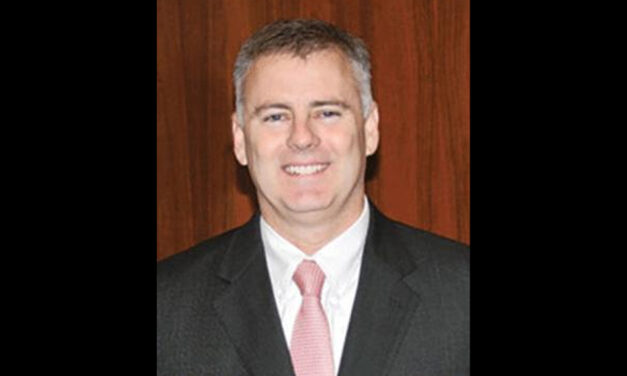
Zachary Thompson

While medical, support services will continue for those already infected, efforts to prevent new infections will get more attention, DHHS says

DRACONIS VON TRAPP | Intern
intern@dallasvoice.com

As new HIV infections continue to be recorded, officials are shifting the focus to a new, comprehensive prevention model, according to Dallas County Health and Human Services Director Zachary Thompson.

Thompson said that while funding will still go to support and medical services for those already infected with HIV, the focus on preventing new infections will be stronger than before.

Thompson said that Dallas leads Texas in the number of HIV and AIDS cases. The numbers are on the rise for youths ages 13 to 24, individuals aged 45 and older, African-Americans, and MSMs (men who have sex with men). New prevention programs are aimed at these audiences, which in the past have proven difficult to reach.

“Younger people think they’re invincible,” Thompson said, “while the individuals above 45 seem to think that their partners are safer.”

But neither assumption is true, Thompson said, encouraging those who think they transcend HIV to get tested and know their status, know their partner’s status, and protect themselves.

As for the numbers among people of color, Thompson said he expects to see an increase in HIV infections among African-American men and women.

“Reaching the people of color has been a challenge over the years,” said Thompson, revealing that for many years communities of color have seen HIV and AIDS as a “white person disease.”

Thompson made a reference to Magic Johnson and how his infection brought the attention to communities of color.

“We’ve got to move past the stigmas and focus on prevention efforts,” Thompson said.

The new comprehensive prevention model, Thompson explained, tries to target these high-risk groups. He said the county has been working towards setting up more testing facilities in areas that have higher numbers of HIV infections, such as the 75243 zip code.

New funding is also going towards setting up community-based organizations for prevention.

Thompson said that prevention must start at a community level and start “bottom-up, not top-down.”

In order to reach men and women aged 45 and over, Thompson has said that the county is looking into having HIV and AIDS education available in the community libraries, civic groups and churches. For the youths in the 13-to-24 age range, they’re looking into social networking technology such as Facebook and Twitter to get the word out, as well as starting more school-based programs.

But Thompson also said that people have gotten too caught up in the numbers and infection rates and haven’t paid enough attention to the individual communities that don’t have the resources to help prevent the spread of HIV and AIDS. He agreed that AIDS has fallen out of popularity as a “cause,” and that some are getting complacent about taking care and protecting themselves.

But AIDS isn’t going away and we are not in a safe zone yet, Thompson said. The key is prevention, paying more attention to the community and getting tested.

“Testing, testing, testing,” Thompson emphasized. Know where you stand and keep yourself protected.

—  John Wright

AIDS at 30: Being HIV-positive and living a positive life

Shannon Sims

Shannon Sims knows all about the circumstances that cause many trans women to contract HIV, because she’s lived through it

RENEE BAKER | Contributing Writer
editor@dallasvoice.com

Life as a prostitute, a drug dealer, a homeless woman, a transgender woman, an HIV-positive woman, a Texas prisoner and guard, a showgirl and a college student brings her a mix of experiences few could match.

But at 31 years of age, despite her difficult road so far, Sims has hope. She says she has never given up on God and that her bad karma is behind her now.

“I am going to have a childhood someday,” she says, “and have a birthday party.”

Sims grew up in the South Dallas area as one of four children who all had different fathers. Sims never had a chance to know her own father.

Making it harder was the fact that her mother, Dorothy Walker, was never able to accept the feminine side of her transgender daughter.

“I was on my own since 13, when my mom gave me the boot,” Sims says.

She says her mother reached a breaking point when Sims evolved past playing with Barbie dolls and began expressing herself in a more feminine and vocal manner. That was the beginning of Sims’ life as a transient.

“I used to sleep on the streets for weeks at a time,” she says, “mostly in the South Dallas and Fair Park area.”

Sims lived under bridges and was “in and out” of trash cans, finding food to eat wherever she could.

She says many have no idea what it was like living and sleeping with “roaches and insects crawling all over me.” She says her circumstances left her little choice but to turn to prostitution to survive, a choice that she wishes she had never been forced to make. She said she “came to Oak Lawn to prostitute [herself] for years and years.”

Even today, though it is largely past her, Sims says she has had to “turn a trick or two” to make ends meet, since other jobs can be very hard to come by. To those who might judge her for her decision, Sims says they need to understand that when you are an obviously transgender woman, “you can’t just walk into a place and hand them a resume.”

Indeed, the National Center for Transgender Equality reported in 2011 that 16 percent of a national transgender population feels “compelled to work in the underground economy for income (such as doing sex work or selling drugs).”

When Sims was 17 years old, she got a lucky break. By night, she had been living in a ticket booth at Fair Park in Dallas, sneaking through the air conditioning ducts to get in. To lull herself to sleep, she would read through the telephone book.

“By the grace of God, I came across the number for the Job Corps,” she says.

The next day, Sims called the Job Corp number, and she kept calling until she was given a chance to join the North Texas Job Corps program. That gave her a new start in life, allowing her to get her GED, a driver’s license, clean clothes, career planning and job placement as a security guard.

But at 18, Sims just hadn’t reached a level of maturity to handle the responsibility of her new life. Then she started selling drugs,and it all came crashing down around her.

“I got pulled over for about a kilo — 960 grams of crack cocaine,” she says. “That was my first time in trouble with the police.”

That first time cost her five years of prison time — three years from 2000 to 2003, and another two years from 2005 to 2007. The official charges were drug possession, drug manufacturing and drug distribution.

It was not quite four years ago, Sims says, that she came out of prison “with a new attitude.” She said she had to make a change and “either continue to do the stuff I was doing, or begin to experience the positive side of life.”

While her new positive attitude was a good thing, though, her newly HIV-positive status left her with another obstacle to overcome.

Sims explains that she engaged in some risky behaviors while she was in prison, and she believes that is how she contracted HIV.

“In prison, I was the queen of the block and the most feminine thing there,” she says.

Sims’ life on the streets gave her the smarts to keep her safe in prison, but she was unable to protect herself from the AIDS virus. While she was between stays in prison, Sims received support, as well as her diagnosis as HIV-positive, from the Renaissance III AIDS service organization in South Dallas, which closed its doors in 2005.

As an HIV-positive transgender woman, Sims is not alone. The HIV infection rate among transgender individuals is approximately four times the national average. According to the 2011 NCTE national survey, the HIV infection rate is 0.6 percent for the general population and 2.6 percent for the national transgender sample of 6,450 individuals.

The HIV infection rate increases to 15.3 percent for transgender individuals that engage in sex work. People of color in the transgender sample reported higher rates of infection: 24.9 percent for African-Americans, 10.9 percent for Latinos/Latinas, 7 percent for American Indians, and 3.7 percent for Asian-Americans.

Sims is not surprised that the infection rates are higher for the transgender population. She says it’s a result of the things many trans women have to do to survive.

She says she knows too many transgender women that are in the same situation she’s in, “just trying to survive and make it.”

Sims’ lack of choices landed her in the Dallas jail for prostitution. After getting out of prison, Sims didn’t know what to do and went “out on my own to Cedar Springs. … An officer propositioned me, and they [ended up putting] a leg monitor on me.”

At one point, when Sims was just out of jail, “this dude on a bus” gave her a phone number for Project Reconnect, a program operating through the city of Dallas that helps prisoners gain re-entry into society.

“Without them, I don’t know where I would be,” she says of the program, adding that this program was what finally helped her turn her life around and helped her transition to a normal daily life. She also credits health and food pantry programs at the Resource Center of Dallas as “making a way, when there was no other way.”

Sims says she has seen at least 10 of her friends die of HIV and she wants to make sure she takes care of herself.

Sims works with Oak Lawn restaurants now, and is pursuing an associate’s degree in business at El Centro College. She hopes to pursue a bachelor’s degree in accounting next.

After completing her education, Sims says she would like to channel her energies into creating a resource group that specifically advocates for and supports transgender health and vocational education.

At night, Sims is also known as Laylonni Duvall on the drag circuit. And for now, Sims is thrilled to be able to afford her own place with “a flat-screen TV, a few pretty things and a sleigh bed.” And, she says, she loves being a non-operative transgender woman and doesn’t want to have gender reassignment surgery.

But then she looks up for a minute and says, “Well, maybe one day.”

—  John Wright

AIDS at 30: Marine goes from the closet to a positive life

A former Marine talks about how being closeted led to drug use, which led to HIV infection. But he doesn’t let the virus control his life

Editor’s note: Daniel is identified in this story by his first name only at his request.

DAKOTA SHAIN BYRD | Contributing Writer
editor@dallasvoice.com

Daniel’s lifelong dream was to join the U.S. Marines, and so at age 18, fresh out of high school, he enlisted.

Daniel was determined to be the best Marine he could be, and he trained hard. But when he started to struggle with his sexuality and the difficulty of staying closeted while in the service, all the training couldn’t help. So Daniel, desperate for some relief, some escape, turned to IV drugs. Soon he was addicted.

Eventually, Daniel conquered his addiction and two years ago, at the age of 38 and after 20 years of service and after rising to the rank of master sergeant, he prepared to retire from the military.

Two months shy of retirement, though, Daniel came down with a cold that he just couldn’t seem to shake. So he went to his doctor, who took blood for testing. The results weren’t good.

Daniel had HIV.

As dire as the news seemed, Daniel’s doctor offered some hope, telling him that an HIV infection is no longer the death sentence it once was. The doctor told him, “You can live 30 maybe 40 more years — maybe even longer with the strides they’re making in trying to find a cure for this,” and urged Daniel to find out everything he could about HIV/AIDS and the treatments that are available.

Daniel took that advice and today, at age 40, he is optimistic about his future and refuses to let HIV/AIDS control his life. Instead, he says, his life controls the disease, as he explains in this conversation with Dallas Voice.

Dallas Voice: What do you mean that your life controls your infection?

Daniel: Well, I don’t let the infection keep me from doing what I want to do in and with my life. I’m going to college; I have a loving boyfriend, and I have a career. The disease keeps me from doing some things, and I don’t go to certain places where I know I run a higher risk of getting a cold that could become worse. But really, it doesn’t control me. I do the things I want to do, and live pretty much how I want to live. Well, I want to live in a mansion, but that’s obviously not happening anytime soon!

DV: How do you maintain such a positive outlook?

Daniel: I’m glad you asked me that question, because it’s a really good one. Most people think that when you become infected with HIV it’s a quick death sentence. It was, 30-some-odd years ago, and yes, there are still strains of HIV that can kill a person within a year. But for the most part, HIV and AIDS itself won’t kill you. Your weakened immune system and catching a cold that turns into pneumonia or something like that are what usually kill people. Well that, and hatred and ignorance.

DV: What was it like learning that you were HIV-positive in the Marines?

Daniel: It wasn’t easy. I thought there might be a chance, because I’d remembered somebody I had used with was HIV-positive. But I didn’t remember sharing a needle with them. Turns out I did. Point is, it wasn’t easy.

I’m from the generation that thought being gay was the worst thing ever and that it was a choice whether or not to be gay. We didn’t know much about being gay and what’s worse is that HIV wasn’t taught to us so much. We were taught to use protection, but what about those of us who turned to drugs to ease the pain of our lives? What about those of us who were in the closet and didn’t want to seduce young men, but instead, just have a man our age to come home to and love?

My generation made it hard, and that mentality carried over into Marines.

I went through the five stages of depression, of course, and the men in my platoon were told. They all knew I had been an addict at one point, and that I’d gotten clean. I told them that was how I got infected and they believed me. I kept my orientation quiet and played like “one of the guys.” I had to or else I’d have gotten booted out under [the military’s anti-gay policy called] “don’t ask, don’t tell,” which is still technically in action. It’s being reviewed for a repeal but it still exists on a case-by-case sort of deal.

DV: What is a day-to-day example of your life due to your status?

Daniel: I’m not a cripple; as I said my status isn’t all-controlling. I live my life just like anybody else: I get up in the morning, get a shower, eat breakfast and go to school and then to work. And then come home, make and eat dinner, then, if my boyfriend and I feel up to it, have sex. I’m normal, just like anybody else. That’s what a ton of people’s lives are like.

Yeah, I have to take medicine for it. But I also live a pretty healthy and fit lifestyle. The medicine is expensive; everybody knows that. If you live a healthy lifestyle and take care of yourself, your life won’t be much different from before.

It might sound cheesy, but to quote Miley Cyrus, “Life’s what you make it.”

DV: You said that you’re sexually active. Is your boyfriend HIV-positive, too?

Daniel: No, he’s not — thank God for that. He’s negative, and we take all the steps possible to keep him that way. … Just be protected and be cautious. A small amount of time and caution could save you from a lifetime of the disease.

DV: What do you have to say to the addicts out there who might be putting themselves at risk of becoming HIV-positive?

Daniel: First off, addiction is a disease. It’s a sad thing that the generation before mine, and my generation, didn’t realize this before. Today’s generation and the generations coming up are becoming more aware of this.

Secondly, addiction has no known cure, just like HIV doesn’t. It’s smarter to sober up — and sober is synonymous with being clean because any substance abuse at all is still addiction, whether it be alcohol or narcotics — and make meetings rather than to run the risk of infecting yourself with a second incurable disease.

If you are out there using, or in the rooms of NA or AA and are thinking about using, seek help. Don’t use, because you may just come down off that high and find yourself in a worse situation than you were before.

Thirdly, if you’re not at the point in your life yet to where you can get clean, be smart. Don’t share needles, syringes or anything like that. If you do a [“play and party,” where you get high and have sex], use a condom. I can’t stress that enough: If you’re going to use, protect yourself as best you can.

I still think you shouldn’t use at all, and I’m a prime example that there is life after addiction and that you can live your life without using drugs. Just get yourself some help. Find some recovery. That goes for the kids who go to raves and clubs to meet people, too.

DV: Why do you think so many people are afraid to talk about HIV?

Daniel: Do you mean besides the fact that we live down here in Texas, where there’s a hell of a lot of conservatives? Well most people are afraid to talk about it because they don’t understand it. As the age-old idiom states: “What we don’t understand, we fear.”

People need to be educated, especially the youth in schools. MTV has its “Teen Mom” TV series, and that’s almost glorifying pregnancy and unprotected sex among teens. We gays aren’t the only ones affected by HIV; the straight community is, too.

Teens and young adults need to be taught about abstinence, I can understand that. After that though, they need to be taught about safe sex, and sex between gay couples. The gay community is majorly harmed by this not being discussed in the health classes in high schools and middle schools.

Teens are teens; they’re going to have sex, going to experiment to some degree. It’s better that they be protected and have knowledge not just about abstinence, but that they also know about safe sex and sex between same-sex couples.

DV: How do deal with the knowledge that you’ve got to live with this disease the rest of your life? And what do you have to say to those out there who find out they are HIV-positive?

Daniel: Well, I kind of feel like I answered this one already through most of my other answers. But here’s how I live life: I make myself get up on the days when I feel like crap. Even when I’m having a horrible day, I think, “Hey, it could be a lot worse. I could be dying right now, or starving to death because my government decided I’m not an actual person, or even be a slave to human trafficking.”

Yeah, I’ve got HIV. Yes, there are times when it is hard, and where I can feel myself being hit. But you just have to force yourself to keep at it. The going will get tough, but you can do it.

I try not to think morbidly, but sometimes I do. And that’s okay, because it puts things in perspective for me.

You have to take life as it comes, one day at a time, and live it on the terms of that day. Sometimes you’ll be a on a pink cloud, happy and enjoying life, when everything is good like an upbeat pop song. At other times, you will have issues and have to live with them.

As for what I have to say for those who find out they are HIV-positive: Breathe, pray, seek out your friends and family, and find out all you can about your exact status and conditions. The more informed you are the better.

Life may feel like it stops when you get the diagnosis, but it doesn’t. You can still keep living life, still follow after and achieve your dreams, and you can inspire others to do the same. You are still the same person you were before you got the diagnosis, and you still have a life to live; so keep your head up and live it.

—  John Wright

The value of an ounce of prevention …

It’s true that after 30 years, treatments are available that can control HIV, but the question is, can we afford the treatments?

DAVID WEBB | The Rare Reporter

Three decades into the HIV/AIDS epidemic, more is known about the disease than ever before. But the future looks as uncertain as ever in terms of how it will be managed in coming decades.

Treatments for HIV infections have radically evolved since the early days when medications like AZT prolonged the lives of some HIV-infected individuals but failed to help others because side effects like nausea and pain caused the patients to quit taking the drugs.

Now, HIV-infected people often appear to be living longer and healthier lives, thanks to the development of the anti-retroviral drugs in the 1990s.

Although healthy appearances often belie the massive, complicated regimens of multiple, often-changing medications to sustain patients, there is no doubt HIV-infected people are enjoying a better quality of life.

Ongoing research by scientists around the world gives hope to the possibility there will someday be a vaccine to protect against HIV and possibly even eradicate it after infection.

Just recently, it was reported that a man suffering from both leukemia and HIV who received a bone marrow stem cell transplant in Germany in 2007 is now HIV-negative. His bone marrow transplant reportedly came from a donor who was immune to HIV, an immunity that some scientists believe exists in about 1 percent of the Caucasian population.

The downside of all this is the enormous cost of HIV treatments when they eventually become available to the public. The bone marrow transplant treatment is incredibly painful, dangerous and expensive, so its widespread use is unlikely.

Billions are already being spent on the delivery of anti-HIV drug cocktails, and those costs are expected to spiral in the next decade to astronomical amounts.

At the same time, all of the major countries in the world are struggling to remain solvent during the worst financial crisis of more than a half-century.

Regardless of what medical treatments become available, the majority of people may not be able to afford them. Millions of people in the U.S. are unemployed and uninsured for health problems they face.

The states and the federal government have long provided health care and other resources for HIV/AIDS patients, but crashing budgets are already placing limits on those programs.

And it’s only going to get worse as governments struggle to make ends meet.

Insurance premiums are rising so quickly in tandem with the rising cost of health care that many companies are struggling to provide benefits for employees. A decade ago, it was common for companies to pay for 100 percent of employees’ health insurance policies, but now it is more common for employers to require 20 percent payments of premiums by employees.

In addition to government cuts, the amounts of money HIV service organizations have been able to raise from the charitable public is almost certainly going to decrease as well. People just don’t have as much income to share with less fortunate people.

For older Americans looking to retire and anticipating the end of their job-afforded health insurance, the availability of medical care through the federal Medicare program is going to be more problematic, as it will be for younger people contracting new HIV infections.

And even if an older American has abundant financial resources to access whatever medical care is available, the truth is that the drug cocktails that have prolonged the lives of younger people just don’t work as well for anyone over 50, according to scientific studies.

It’s hard to believe that the 30th anniversary of the HIV epidemic observed this month was accompanied by a United Nations report that 30 million people have died from the disease, and that 7,000 new infections occur globally every day.

What’s more, a Centers for Disease Control and Prevention study was released earlier in the month reporting that LGBT students are more likely than heterosexual classmates to engage in risky behavior like alcohol and drug use, which presumably could lead to unprotected sexual activity. It is believed that an estimated 40,000 new infections occur yearly in the U.S., often in people who are unaware of their HIV-positive status.

So three decades into the HIV epidemic, we find ourselves pretty much where we were in the beginning back in 1981 when we realized it was likely a blood-borne, sexually-transmitted disease in most cases. No matter how rich someone is or how old they are, an HIV infection is unaffordable in every way imaginable.

Prevention of an infection is still the best answer for everyone.

David Webb is a veteran journalist who has covered LGBT issues for the mainstream and alternative press for three decades. E-mail him at davidwaynewebb@yahoo.com.

—  John Wright

‘AIDS at 30’ forum set for Tuesday

Manisha Maskay, Ph.D, Dr. Brady Allen, M.D, and Dr. Christopher Evans M.D.

Panel discussion to explore the current status of HIV treatment and the future of treatment and prevention efforts in next decade

TAMMYE NASH | Senior Editor
nash@dallasvoice.com

Thirty years after the first cases of what would eventually come to be known as AIDS were discovered in gay men in Los Angeles, San Francisco and New York, the struggle to contain the world-wide epidemic continues.

But where do we stand today in that fight, 28 years after HIV was determined to be the cause of AIDS, and 24 years after the FDA approved AZT as the first real treatment to fight HIV?

On Tuesday, June 28, Dallas Voice — in partnership with Cathedral of Hope and a slate of business sponsors and community organization partners — presents “AIDS at 30: A Community Forum,” to explore the questions of where we are now in the fight, and where we are headed.

The forum will be held at Cathedral of Hope’s Interfaith Peace Chapel, 5910 Cedar Springs Road. Doors open at 6 p.m., and the forum runs from 6:30 p.m to 8 p.m.

The forum is free and open to the public.

“We decided to produce this forum, ‘AIDS at 30,’ from a ‘today and tomorrow’ perspective,” said Robert Moore, Dallas Voice publisher.

“We all know the story of AIDS over the last 30 years. What people are really hungry for now is a real-world look at where HIV prevention and treatment are headed over the next decade,” Moore added. “People want to know that there is hope for a cure, and that the issue of HIV and AIDS is not yesterday’s story, but that it is, indeed, tomorrow’s story.”

The forum will be divided into three sections, with AIDS Arms Associate Executive Director Manisha H. Maskay, Ph.D., leading off on the topic of “HIV Prevention Strategies and Challenges for the Next Decade.”

Maskey has more than 30 years of experience in the field of public health, medical nutrition therapy and health education and behavior change. In addition to her work at AIDS Arms as both associate executive director and director of community and client services, she has worked for the Columbus Health Department in Columbus, Ohio, and as an assistant professor of medicine and director of clinical nutrition and health education services at the University of Chicago.

Dr. Brady Allen, M.D., with Uptown Physicians Group will lead the discussion on the evening’s second topic, “HIV/AIDS Treatment Today.”

Dr. Allen, who graduated from Southwestern Medical School in Dallas and completed his internship and residency at New Haven Hospital in Connecticut, has been one of the preeminent doctors in treating HIV/AIDS since the early days of the epidemic in Dallas.

After a brief retirement in 2008, he returned to Dallas and to Uptown Physicians in January 2009 to continue his practice.

Dr. Chris Evans, M.D., M.P.H., with AIDS Arms’ Peabody Health Center in Oak Cliff, winds up the presentation with a discussion on “What is the Future of HIV Treatment? The Facts. The Hope. The Fiction.”

A Yale University graduate, Dr. Evans completed medical school at Drexel University in Philadephia before completing his residency in Internal Medicine and a fellowship in Infectious Diseases at Montefiore Hospital in The Bronx. He has been involved in clinical researcher on HIV/AIDS since 2001 and has participated as a sub-investigator in more than 15 studies on HIV/AIDS treatments.

The forum concludes with an opportunity for audience members to ask questions of the panelists.

Platinum sponsors for the forum are Uptown Physicians Group and the Vasquez Clinic. Rx Partners Pharmacy is a gold sponsor.

Community organizations partnering with Dallas Voice to present the forum are AIDS Arms, AIDS Outreach Center of Tarrant County, AIDS Interfaith Network, AIDS Services of Dallas and Resource Center Dallas.

Proceeds from sponsorships and donations go to Lone Star Ride Fighting AIDS, the annual bike ride that raises funds for AIDS Services of Dallas, AIDS Outreach Center and Resource Center Dallas.

—  John Wright

Premature aging an issue for AIDS survivors

30 years after 1st diagnoses, scientists work to pin down cause of complications, while doctors develop treatment guidelines

LISA LEFF | Associated Press

SAN FRANCISCO — Having survived the first and worst years of the AIDS epidemic, when he was losing three friends to the disease in a day and undergoing every primitive, toxic treatment that then existed, Peter Greene is grateful to be alive.

But a quarter-century after his own diagnosis, the former Mr. Gay Colorado, now 56, wrestles with vision impairment, bone density loss and other debilitating health problems he once assumed he wouldn’t grow old enough to see.

“I survived all the big things, but now there is a new host of things. Liver problems. Kidney disease. It’s like you are a 50-year-old in an 80-year-old body,” Greene, a San Francisco travel agent, said. “I’m just afraid that this is not, regardless of what my non-HIV positive friends say, the typical aging process.”

Even when AIDS still was almost always fatal, researchers predicted that people infected with HIV would be more prone to the cancers, neurological disorders and heart conditions that typically afflict the elderly. Thirty years after the first diagnoses, doctors are seeing these and other unanticipated signs of premature or “accelerated” aging in some long-term survivors.

Government-funded scientists are working to tease apart whether the memory loss, arthritis, renal failure and high blood pressure showing up in patients in their 40s and 50s are consequences of HIV, the drugs used to treat it or a cruel combination of both. With people over 50 expected to make up a majority of U.S. residents infected with the virus by 2015, there’s some urgency to unraveling the “complex treatment challenges” HIV poses to older Americans, according to the National Institutes of Health.

“In those with long-term HIV infection, the persistent activation of immune cells by the virus likely increases the susceptibility of these individuals to inflammation-induced diseases and diminishes their capacity to fight certain diseases,” the federal health agency’s chiefs of infectious diseases, aging and AIDS research wrote, summing up the current state of knowledge on last September’s National HIV/AIDS and Aging Awareness Day. “Coupled with the aging process, the extended exposure of these adults to both HIV and antiretroviral drugs appears to increase their risk of illness and death from cardiovascular, bone, kidney, liver and lung disease, as well as many cancers not associated directly with HIV infection.”

In San Francisco, where already more than half of the 9,734 AIDS cases are in people 50 and over, University of California, San Francisco AIDS specialists are collaborating with geriatricians, pharmacists and nutritionists to develop treatment guidelines designed to help veterans of the disease cope with getting frail a decade or two ahead of schedule and to remain independent for as long as possible.

“Wouldn’t it be helpful to be able to say, are you at high risk, low risk or moderate risk for progressing to dependency in the next five, the next 10 years, being less mobile, less able to be functional in the workplace. Are you going to be safe in your home, are you going to remember to take all those medications? How are they going to interact?” explained Dr. Malcolm John, who directs UCSF’s HIV clinic. “All those questions need to be brought into the HIV field at a younger age.”

Research so far suggests that HIV is not directly causing conditions that mimic old age, but hastens patients toward ailments to which they may have been genetically or environmentally predisposed. Plus, their immune systems are being weakened over time even when they are being successfully treated for AIDS, John said.

“That’s probably true for a lot of these things. We aren’t saying HIV’s starting the problem, but it’s added fuel on top,” he said.

Stokes, a patient of John’s who goes by only his last name, is a prime example. At 53, HIV-positive since 1985 and in substance abuse recovery for the last 11 years, he says he is happier than he ever has been. Yet the number of ailments for which he is being treated would be more commonly found in someone 30 years his senior: a condition called Ramsay Hunt syndrome that causes facial paralysis, a rare cartilage disorder for which he has undergone four ear surgeries, bone death in the hip and shoulder, deterioration of his heart muscle, osteoporosis and memory loss.

A specialist recently diagnosed a Kaposi’s sarcoma spot on Stokes’ ankle. Although the cancer is not life-threatening, the sight of young men disfigured by KS lesions was a harbinger of the early AIDS crisis, and its presence on his own body is unsettling.

At his therapy group for men with HIV, aging “comes up frequently,” he said. “I say, ‘Just think what we have come through to have a life today.”’ At the same time, he acknowledges sometimes feeling self-conscious about his physical appearance and worries if “people are not attracted to me and unwilling to go the length of what it means to be with me, no matter how brilliant my mind or my zest for life.”

Loneliness, financial worries and concerns about who will care for them and where can weigh on long-term AIDS survivors in the same way as all adults living in a society that values youth, Charles Emlet, a social work professor at the University of Washington, Tacoma, said.

As they get older and sicker, many feel “doubly stigmatized,” he said. Some people who have lived with the virus for a long time have been getting by on private disability benefits that will run out when they turn 65, forcing them to move to less expensive locations or to consider turning to estranged family members. Like soldiers from a distant war, many lost partners and their closest friends to AIDS.

Such emotional side effects, combined with the physical toll of managing chronic health problems, put older AIDS patients at risk for depression. At the same time, Emlet has uncovered evidence that a majority of long-term survivors also share another trait that typically comes with advanced age: that is, the ability to draw strength from their difficult experiences.

“The older adults I’ve interviewed, many of them talk about how much it means to them to give back, to do something positive with the years they never expected to have,” he said.

Peter Greene can relate to that. At times, like the days he is so exhausted he can’t get out of bed or the pain from his multiple maladies is too intense, he asks himself “the Carrie Bradshaw question — are we really lucky to still be alive?” Carrie Bradshaw was the character played by Sarah Jessica Parker in the Sex and the City TV shows and films.

As frightening and uncertain as this phase of AIDS is, he thinks he knows the answer.

“I’ve tried to make the time I have count, and really, now that I have the body of an 80-year-old, I probably have the wisdom of an 80-year-old as well, which counts for a lot,” Greene said. “Everything becomes clear at the end of your life and in some ways, thinking you’ve been dying all these years, you get moments of clarity that I don’t think everyone gets.”

—  John Wright

RCD continues United Black Ellument

DSHS takes over funding from CDC for peer-to-peer education program

DAVID TAFFET | Staff Writer
taffet@dallasvoice.com

United Black Ellument, a social and support group for African-American men, has changed from an independent program to a program of Resource Center Dallas and will now be funded by the Texas Department of State Heath Services. U-BE’s staff became employees of RCD on May 1.

U-BE works to reduce HIV infection among young gay and bisexual African-American men through peer-to-peer education, program officials said.

The program, created by Dr. Susan Kegeles of the University of California, San Francisco in 2009, was previously funded by the Centers for Disease Control.

The CDC was unable to continue funding beyond two years and UCSF looked for alternative sources of support but was unable to find any.

When DSHS stepped in and agreed to fund the program, the Texas agency looked for partners they have worked with successfully in the past to administer it and chose to partner with RCD.

RCD will maintain the program’s current space on Commerce Street in Deep Ellum.

Program director Ruben Ramirez said the office will remain open Monday through Friday from 3 p.m. to 9 p.m.

“We’re providing a safe space to socialize,” Ramirez said. “To talk in a judgment-free zone.”

He said many of the men who attend have no other place to go and meet people like them.

The program includes a social component with everything from bowling or crawfish boils to an evening of coffee and conversation, he said. But it also includes a prevention and skill-building component.

“We teach how to use a condom and do it properly,” Ramirez said. “How to negotiate safer-sex conversations with partners.”

Through separate funding to Kegeles, the Center for AIDS Prevention Studies in San Francisco will continue evaluating U-BE and its impact on the community and providing technical assistance and training to the staff.

“We welcome the opportunity to continue the outreach and prevention efforts established by U-BE,” said RCD Executive Director Cece Cox. “This opportunity leverages the Center’s expertise in HIV prevention and outreach, still serving men who have sex with men as well as impacting a demographic that has been disproportionately impacted by HIV — the African-American community.”

3116 Commerce St., Suite C. More information and calendar at UBeDallas.org.

—  John Wright

30 years after first AIDS cases, hope for a cure

MARILYNN MARCHIONE  |  AP Medical Writer

Today marks 30 years since the first AIDS cases were reported in the United States. And this anniversary brings fresh hope for something many had come to think was impossible: finding a cure.

The example is Timothy Ray Brown of San Francisco, the first person in the world apparently cured of AIDS. His treatment isn’t practical for wide use, but there are encouraging signs that other approaches might someday lead to a cure, or at least allow some people to control HIV without needing medication every day.

“I want to pull out all the stops to go for it,” though cure is still a very difficult goal, said Dr. Anthony Fauci, director of the National Institute of Allergy and Infectious Diseases.

For now, the focus remains on preventing new infections. With recent progress on novel ways to do that and a partially effective vaccine, “we’re starting to get the feel that we can really get our arms around this pandemic,” Fauci said.

Nearly 30 million people have died of AIDS since the first five cases were recognized in Los Angeles in 1981.

About 34 million people have HIV now, including more than 1 million in the United States.

About 2 million people die of the disease each year, mostly in poor countries that lack treatment. In the U.S. though, newly diagnosed patients have a life expectancy only a few months shorter than people without HIV. Modern drugs are much easier to take, and many patients get by on a single pill a day.

But it wasn’t that way in 1995, when Brown, an American working as a translator in Berlin, learned he had HIV. He went on and off medicines because of side effects but was holding his own until 2006, when he was diagnosed with leukemia, a problem unrelated to HIV. Chemotherapy left him so sick he had to be put into a coma to allow his body to recover.

“They didn’t know if I’d survive that,” Brown said.

Dr. Gero Huetter, a blood cancer expert at the University of Berlin, knew that a transplant of blood stem cells (doctors used to use bone marrow) was the best hope for curing Brown’s cancer. But he aimed even higher.

“I remembered something I had read in a 1996 report from a study of people who were exposed to HIV but didn’t get infected,” Huetter said.

These people had gene mutations that provide natural resistance to the virus. About 1 percent of whites have them, and Huetter proposed searching for a person who also was a tissue match for Brown.

But transplants are grueling. Huetter would have to destroy Brown’s diseased immune system with chemo and radiation, then transplant the donor’s cells and hope they would take hold and grow. Many cancer patients die from such attempts and Brown wasn’t willing to risk it.

His mother, Sharon Brown of Seattle, agreed.

“Before I knew he had HIV I used to have nightmares about it,” and gambling on a transplant to try to cure it didn’t seem smart when the cancer seemed to be in remission, she said.

Several months later, the return of leukemia changed their minds.

Brown discussed the transplant with his boss “and she said, ‘wow, this is amazing. Because you have leukemia, you could be cured of HIV.”’

A registry turned up more than 200 possible donors and Huetter started testing them for the HIV resistance gene. He hit pay dirt at No. 61 — a German man living in the United States, around 25 years old.

Brown had the transplant in February 2007. A year later, his leukemia returned but HIV did not. He had a second transplant in March 2008 from the same donor.

Now 45, Brown needs no medicines, and his only health problems are from the mugging he suffered two years ago as he returned home one night in Berlin. Brown was knocked unconscious, required brain surgery and therapy to walk and talk again, and doesn’t have full use of one arm. He moved back to the United States in December.

“He’s now four years off his antiretroviral therapy and we have no evidence of HIV in any tissue or blood that we have tested,” even places where the virus can lie dormant for many years, Huetter said.

Brown’s success inspired scientists to try a similar but less harsh tactic: modifying some of a patient’s infection-fighting blood cells to contain the mutation and resist HIV. In theory, this would strengthen the immune system enough that people would no longer need to take HIV drugs to keep the virus suppressed.

Scientists recently tried this gene therapy in a couple dozen patients, including Matthew Sharp of suburban San Francisco. More than six months later, the number of his infection-fighting blood cells is “still significantly higher than baseline,” he said.

It will take more time to know if gene therapy works and is safe. Experiments on dozens of patients are under way, including some where patients go off their HIV medicines and doctors watch to see if the modified cells control the virus.

The results so far on the cell counts “are all wonderful findings but they could all amount to nothing” unless HIV stays suppressed, said Dr. Jacob Lalezari, director of Quest Clinical Research in San Francisco who is leading one of the studies.

The approach also is not practical for poor countries.

“I wouldn’t want people to think that gene therapy is going to be something you can do on 33 million people,” said Fauci.

Other promising approaches to a cure try new ways to attack the dormant virus problem, he said. They hinge on getting people tested and into care as soon as they become infected.

Fauci’s institute has boosted money for cure research, and the International AIDS Society, a professional organization for those who work in the field, has added finding a cure to its strategic plan.

“There are paths forward now” to a day when people with AIDS might be cured, said Dr. Michael Horberg, a member of President Obama’s HIV/AIDS council and vice chairman of the HIV Medicine Association, doctors who treat the disease. “But it’s not tomorrow, and it’s not today.”

—  John Wright

LSR Journal: Out of the saddle, but not the Ride

Brady Allen

Although health issues will keep Dr. Brady Allen from riding in LSR this year, he still plans to participate as part of the volunteer medical team

M. M. ADJARIAN | Contributing Writer
editor@dallasvoice.com

Dr. Brady Allen of the Uptown Physicians Group has tended unstintingly to medical needs of the gay community for last 30 years. And in the last two years, he’s gone from casual spin and mountain bike cyclist to Lone Star Ride participant.

The transformation began in 2009.

Allen had just moved back to Dallas after a brief period of retirement in Seattle, and friends suggested he become involved in the LSR.

He needed little urging: Road biking on behalf of a cause he believed in seemed the perfect way to re-integrate himself into the community.

“I’d been involved [in the fight against AIDS] since 1982,” says the 57-year-old internist. “So I had memories of people who had passed on, including my best friend and a couple of favorite patients of mine. I think about [them] a lot.”

Allen’s 2010 LSR debut was impressive. Not only was he the third-highest fundraiser — bringing in $6,000 for the event — he also finished second overall in the 45-mile Sunday leg of the ride after the Saturday ride was rained out.

This year, however, the good doctor has to tend to his own health. After developing a blood clot in his calf at the end of April, Allen had to withdraw from this year’s ride.

His desire to participate in the event remains undiminished, though, and participants will likely see him on the medical team, doing what he does best.

“This year, I was going to do the 100- and 75-mile [ride options], because I was in much better shape,” says Allen. “I had trained harder and I was healthier. I’d lost about 15 pounds this year.”

He had also started his fundraising efforts earlier. In 2010, he began soliciting donations in May. This year, he began fundraising in March and already had pledges totaling $1,200 before he had to get out of the saddle.

That money will still go to the LSR. But Allen, who also sits on the board at Design Industries Foundation Fighting AIDS (DIFFA) and has actively supported other HIV/AIDS organizations, including AIDS Arms, for many years, will have to defer his dream of reaching the $10,000 goal he’d set for this year until 2012.

“[2010 was about] trying to ride in this Texas heat on a bike,” says Allen, who remains upbeat despite the temporary health issues he currently faces. “I [also] had to learn about how much to hydrate, how many salt tablets I had to take the day of the ride, what were the right foods to eat [and] just how to pace myself so I wouldn’t get cramps.”

He also had to learn the more technical aspects of road cycling, including how to shift gears, fix a flat and — perhaps most problematically of all — use the “pedals” of his bike.

“The bike pedals are not real pedals,” Allen explains. “You have these clips on the bottom of your shoes [that you use to] clip into the pedals, which gives you more stability on the bike. But you also have to clip out when you stop.”

Though unable to ride this year, Allen does expect to fully immerse himself in the social aspect of the 2011 ride.

“[I’m looking forward to] the camaraderie, the friendships and relationships that I’m going to develop with people I met last year and with new riders,” Allen says.

With no trace of regret for what could have been this year, he adds “It’ll be very exciting just to be in the crowd and meet new people and have common goals and passions.”

Lone Star Ride Fighting AIDS takes place Sept. 24-25. For more details or to donate to a specific rider or team, or to the event overall, go online to LoneStarRide.org.

—  John Wright

Facing the challenge with excitement, energy

Jerry Calumn

New event manager Jerry Calumn wants to get the Lone Star Ride even more fiscally fit than before

M. M. ADJARIAN | Contributing Writer
editor@dallasvoice.com

Change is the only constant; no one knows this better than Jerry Calumn, the former marketing consultant/standup comedian who in March replaced Dave Minehart as event manager for the Lone Star Ride Fighting AIDS.

Articulate and sizzlingly energetic, Calumn is a man with a plan. He has to be.

The economic downturn hit nonprofits like the LSR especially hard. While the worst of the financial crisis seems to be over, it can take up to two years after a recession has ended before nonprofit organizations are able to come out of their own “parallel recessions.”

“[Once surviving] nonprofits have the resources to get their donations back, the competition for [things like] dollars and volunteers gets hefty,” Calumn observes.

For AIDS nonprofits in particular, however, the pressures are even greater, as costs for the new medical options that will become available to HIV/AIDS patients in the next 5 to 10 years are expected to skyrocket. And those are the kind of costs that Lone Star Ride’s beneficiary organizations will have to cover.

“The new treatments will be great, but they will be expensive,” says Calumn. “In the next [decade] of this epidemic, we are going to face very serious challenges with regard to the amount of money we are going to have to raise” to help the ride’s beneficiary organizations continue to cover the costs.

If Lone Star Ride repeats its 2010 fundraising efforts and brings in $150,ooo this year, that will put the event’s total for its 11-year history over $2 million.

Calumn’s strategy to increase the fiscal fitness of the ride by working the LSR core is similar to one cyclists might use to train their bodies for the actual ride itself.

He’s also actively listening to what his riders have to say about what they want to do and how they want to go about doing it.

“We’re putting a lot more tools in the [cyclists’] hands,” he says. “We’re [also] training them better on how to fundraise. And we’re connecting them to more rider-centered events throughout the season.”

One example of the way Calumn is opening up and “toning” the LSR is through the inclusion of a “ Map Your Dream Ride” meeting. On May 24, cyclists gathered together to discuss possible routes for this year’s ride. The final map layout will be announced in July.

The recession and increased costs for HIV treatment or not the only hurdles the LSR faces as an organization. Calumn, who moved to Dallas from New York, saw 50 percent of Jewish charities there and in New Jersey (and 30 percent nationally) close in the wake of the 2008 Madoff scandal.

This in turn has given rise to drastically increased investor/donor suspicion regarding who’s handling their money and how. Sensitive to these new realities, Calumn is also working to make the LSR a more transparent nonprofit.

“[That scandal] has really ingrained in people’s heads to look more closely at organization’s finances,” he says. “We don’t ask enough tough questions on the program side of our nonprofits, especially in the gay, lesbian and HIV community.”

As a conscious agent of change and man who has lived — and thrived — with HIV for the last 17 years, Calumn has his work cut out for him. Yet he relishes what’s ahead and embraces his work with inspired fervor.

He even plans to be out on the road himself, joyfully adding his own blood, sweat and tears into the mix.

His excitement is as electric as it is palpable. Declares Calumn, “I told the board and my management team as soon as I landed [in Dallas last spring], ‘I am riding!’”

And over the starting line he goes, a winner before the race has even begun.

Lone Star Ride Fighting AIDS takes place Sept. 24-25. For details or to donate to a specific rider or team or to the ride in general, go online to LoneStarRide.org.

—  John Wright