Libertarian Senate candidate from Dallas backs marriage equality

John Jay Myers

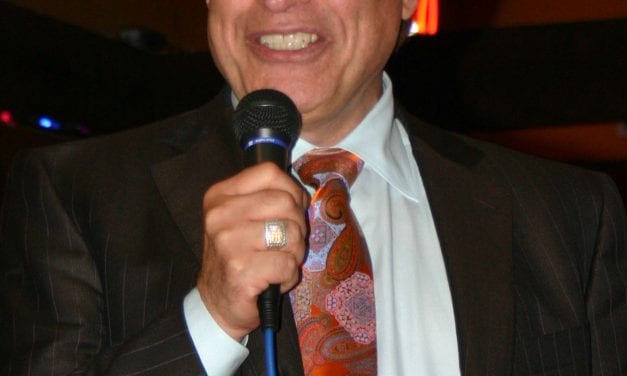
John Jay Myers appears on the Nov. 6 ballot as a Libertarian in the U.S. Senate race in Texas. In a new ad that has begun airing on cable around the state, Myers says he favors marriage equality.

His YouTube page says that a $5 donation allows the ad to run once in one to two zip codes on cable TV. He already has money to air it 575 times.

His platform is “End the wars. End corporate welfare. Live as you see fit.”

“It’s certainly not the government’s business to tell you who you can marry,” Myers says in the last line of the 30-second spot.

Myers owns The Free Man Cajun Cafe & Lounge in Deep Ellum.

Democratic Senate candidate Paul Sadler also supports marriage equality. Republican Ted Cruz, the heavy favorite to win the race, opposes marriage and civil unions.

Watch the ad below.

—  David Taffet

State Sen. John Carona suggests colleague, likely opponent in lieutenant governor’s race is gay

John Carona

State Sen. John Carona, R-Dallas, has allegedly spread word throughout the Texas Senate that fellow Republican Sen. Dan Patrick of Houston is having marital problems.

Leaked emails published by political news website the Quorum Report reveal that Patrick was upset that Carona had allegedly told fellow senators that he and his wife Jan were separated and possibly divorcing, along with “a few other negative comments about me in an obvious attempt by him to discredit me,” the Houston Chronicle reports.

Carona’s emailed response to state senators mentions that while he “heard rumors regarding [Patrick’s] marital status and sexual preferences for a while now,” he did not share rumors that Patrick was “separated, divorced, or gay.

Dan Patrick

Patrick then responded to the gay remark by writing that Carona needed to apologize to his family for his initial comments and “owes me an apology for his latest smear, another fabrication by Senator Carona.”

The motive behind the emails could be the ambitions of both men to serve as lieutenant governor following the possible election of Lt. Gov. David Dewhurst to the U.S. Senate. Both Carona and Patrick are likely candidates for the election in 2014, with Carona the leading contender to be Dewhurst’s interim replacement.

Carona could not immediately be reached for comment.

From the Houston Chronicle:

The accusation from Patrick, in part, in an e-mail to fellow senators:

I was in Dallas last week and learned that Senator Carona has told people outside the Senate that Jan and I are separated and may get divorced. He added in a few other negative comments about me in an obvious attempt by him to discredit me for some reason. … There is no excuse or justification for his actions. He could have easily checked the story out to see if it was true. He didn’t care if it was true.

The response from Carona, in part, also in an e-mail to fellow senators:

The email which you blasted to our colleagues and then provided to the media is false and you would have known that had you called or emailed before sending it. …Though I have heard rumors regarding your marital status and sexual preferences for a while now, at no time have I told anyone that you are either separated, divorced, or gay.


—  Anna Waugh

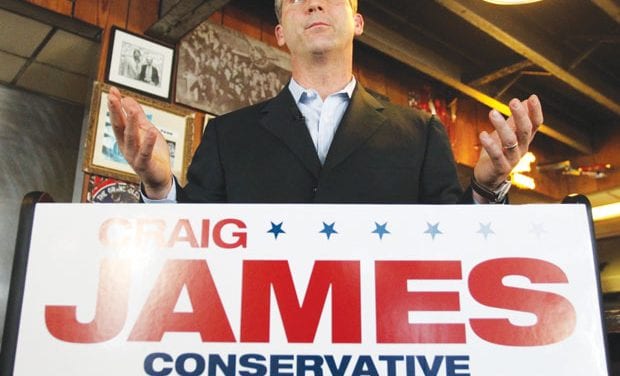
Craig James: I’m not a Nazi

Craig James

A while back Resource Center Dallas’ Rafael McDonnell pointed out that Republican U.S. Senate candidate Craig James had hired an openly gay campaign consultant, the legendary Arthur Finkelstein.

Finkelstein, who married his partner in Massachusetts in 2005, has worked for many virulently anti-gay politicians over the years, including his instrumental role in the rise of former Sen. Jesse Helms of North Carolina.

But James argues that his decision to hire Finkelstein, who’s also Jewish, somehow proves that he’s “tolerant” of both Jews and homosexuals, according to the Dallas Morning News.

From The DMN’s profile of James that ran Sunday (subscription only):

James says his Christian faith informs his fiscal conservatism. “God talks about not being irresponsible with money. He talks about debt not being a good thing. He talks about people going to work and being responsible.”

He believes homosexuality is a choice and opposes gay marriage and civil unions but said that doesn’t mean he’s intolerant. As evidence, he specifically singled out two top campaign advisers who he said are Jewish, one of them openly gay.

“My actions are solid proof that I’m not judgmental,” he said.

—  John Wright

WATCH: Craig James suggests his opposition to civil unions is rooted in the Ten Commandments

James.Craig

Craig James

U.S. Senate hopeful Craig James suggested during a televised debate Friday night that his opposition to legal benefits for same-sex couples, including civil unions, is rooted in the Ten Commandments.

During a debate sponsored by the Belo Corp. in Dallas, moderator Sarah Forgany of KENS-TV Channel 5 in San Antonio asked James how much his personal faith would affect his ability to represent all Texans.

A clip was then played from a recent interview James did with the Texas Tribune, in which James doubled down on his previous statements that gay people will have to “answer to the lord” for their actions, that being gay is a choice, and that same-sex couples shouldn’t be entitled to any legal benefits, including civil unions. James previously made those statements during a forum at the Dallas Country Club in February, as part of a group attack against candidate Tom Leppert for appearing at gay Pride while mayor of Dallas.

This time, Forgany pointed to recent polls showing that 61 percent of Texans support civil unions for same-sex couples. “In this case, would your personal religious faith be in the way of supporting that issue?” Forgany said. Here’s James’ response:

James: “You know, I have said also, as I start every speech that I’ve done now for four months, my goal in life is that when I meet my maker, he says, ‘Well done, my good and faithful servant, period.’ It’s not to become a United States senator. So whenever I make the decisions and the things that I just talked about there [in the clip], all of us are free to make decisions in this country, and all of us will be accountable to God for those, including me. I do support the marriage between a man and a woman, and my faith is my core, and anyone who doesn’t support their core and what they believe … This country was founded on the principles of Christianity, and I’m never gonna back away from that.”

Forgany: “So you’re saying that there are times when your personal religious faith will get in the way of that?”

James: “Never gets in the way. The moral fiber of this country is in trouble, and I will stand and honor the Ten Commandments, always will, and I’ll never be apologetic for that. I will always look and seek what the light put at my feet from the lord has provided for me, absolutely. In regard to being judgmental or discriminating, absolutely not. Everyone’s free to make their own decisions, and at the end of the day we all will be accountable to our lord and maker.”

None of the other candidates at the debate — Leppert, Ted Cruz and Lt. Gov. David Dewhurst — was asked to weigh in. However, all four major candidates in the Republican primary have indicated in the past that they oppose both same-sex marriage and civil unions. The exchange with James begins at about the 11:45 mark in the video below:

—  John Wright

Top 10: City elections proved groundbreaking for LGBT community

Rawlings

VOTERS LIKED MIKE  | Mike Rawlings defeated David Kunkle in a runoff for Dallas mayor in June. (John Wright/Dallas Voice)

No. 2

With former Dallas Mayor Tom Leppert announcing that he was stepping down early to run for the U.S. Senate, and longtime Fort Worth Mayor Mike Moncrief announcing he would not be running for re-election, candidates were lining up early this year for both offices. And the LGBT community on both sides of the Trinity River played a more visible and more vocal role than ever before in city elections.

In Dallas, businessman Mike Rawlings, former Dallas Chief of Police David Kunkle and City Councilman Ron Natinsky, who had reached his term limit representing District 12, quickly emerged as the frontrunners in the mayoral election. All three candidates came courting the LGBT community, participating in the North Texas

GLBT Chamber of Commerce’s mayoral debate and asking for endorsements from individuals in the community, as well as from the Dallas Gay and Lesbian Alliance and Stonewall Democrats of Dallas.

Kunkle’s involvement with the community during his days as police chief helped him win the Stonewall Democrats endorsement in the general election, while Natinsky withdrew his name from contention for the Stonewall endorsement after questions came up over whether his Republican voting record disqualified him.

DGLA threw its weight behind Natinsky, then went a step further to issue a warning against Rawlings, saying that based on his answer to a question during the confidential interview, they feared the candidate’s commitment to business interests might override his commitment to civil rights.

In the general election, Kunkle won in precincts considered to be heavily LGBT and came away with 32 percent of the vote overall to claim a place in the runoff against top-vote-getter Rawlings, who had 41 percent.

The two candidates continued to court the LGBT vote in the runoff, both participating in a second debate on LGBT issues, this one sponsored by Dallas Voice and partner organizations. Although DGLA had shifted its endorsement to Kunkle, Rawlings’ performance in the second debate seemed to win over some LGBT voters, and he won the runoff and the mayor’s seat, with 56 percent of the vote. Kunkle, however, again captured the most heavily LGBT precincts.

DGLA and Stonewall also split their endorsements in the District 14 City Council race, where longtime LGBT ally Angela Hunt faced three opponents, including one-time supporter James Nowlin, a gay man who filed in the race early when Hunt was still considering a run for the mayor’s seat. The race split the community, with Stonewall

Democrats endorsing Nowlin, who was a member of the organization, and DGLA backing Hunt. Hunt went on to win another term of the council without a runoff, taking 65 percent of the vote in the general election. Nowlin was second with 30 percent.

In Fort Worth, former City Councilman Jim Lane, who was on the council when the city became one of the first in the state to include protections for lesbians and gays in its nondiscrimination ordinance, and former Tarrant

County Tax Appraiser/Collector Betsy Price were the top two vote-getters in the general election, and during the runoff campaigns, the two met for the first-ever Fort Worth mayoral debate focusing on LGBT issues.

While Price had raised suspicion among some with a vague answer regarding her position on the city’s recent decision to include protections based on gender identity and gender expression in the nondiscrimination ordinance, both she and Lane pledged at the debate sponsored by the GLBT chamber and Fairness Fort Worth to support LGBT equality and to maintain an open door to the community.

Price went on to win the runoff, 56 percent to 44 percent, and in October became the first Fort Worth mayor to not only ride in, but also serve as grand marshal of, the Tarrant County Gay Pride Parade.

Also in Fort Worth, the city’s first and only openly gay councilmember, Joel Burns, still riding a wave of national popularity following his “It Gets Better” speech during a council meeting the previous October, didn’t even draw an opponent in his bid for a second full term on the council.

Down the road in Arlington, Chris Hightower became the first openly gay candidate to run for city council, tossing his hat into the ring along with three others challenging District 5 incumbent Lana Wolff. Hightower, who easily outpaced all the candidates in fundraising, came out on top of the heap in the general election. But he lost the runoff to Wolff by less than 100 votes, an outcome many of his supporters blamed on anti-gay robocalls describing him as a “weirdo,” a “convicted sex pervert” and a “sex creep” — even though Hightower has no criminal record.

— Tammye Nash

This article appeared in the Dallas Voice print edition December 30, 2011.

—  Kevin Thomas

Judiciary committee passes measure to repeal DOMA

Sponsor acknowledges votes aren’t there yet to get Respect for Marriage Act approved by Senate

Feinstein.Diane

Sen. Dianne Feinstein

Lisa Keen  |  Keen News Service
lisakeen@me.com

The U.S. Senate Judiciary Committee on Thursday, Nov. 10, voted to recommend passage of a bill to repeal the Defense of Marriage Act.

The bill is the Respect for Marriage Act. Thursday’s 10-to-8 vote along partisan lines had been originally scheduled for Nov. 3 but was postponed a week at the request of Republicans on the committee.

Republican Charles Grassley criticized Committee Chairman Patrick Leahy, a Democrat, for putting the bill on the committee’s agenda, saying the committee should, instead, be taking up “bills that can pass” and which address the country’s financial problems.

Grassley said the measure “lacks the votes to pass the Senate” and that, even if it does pass the Senate, “it will not be taken up in the House,” which is controlled by Republicans.

Grassley repeatedly referred to the measure as the “Restoration of Marriage Act,” instead of the “Respect for Marriage,” and said it would not accomplish “restoration of any rights,” but rather create “new rights that same-sex couples have never had under federal law.

He also said there is a “universal religious view” that marriage is “about procreation and child-bearing.”

“To me, this debate is about stable families, good environments for raising children, and religious belief,” said Grassley. “It is not about discriminating against anyone. No society has limited marriage to heterosexual couples because of a desire to create second-class families.”

He rebuffed the argument of many, including the bill’s chief sponsor, Sen. Dianne Feinstein, D-Calif., that the fight to repeal DOMA is reminiscent of the fight to repeal laws that barred interracial marriages. Quoting Wade Henderson, president of the Leadership Conference on Civil and Human Rights, Grassley said such comparisons can be “deeply offensive” to African-Americans.

Log Cabin Republicans President R. Clarke Cooper offered some support for Grassley’s concerns about “priorities,” but said the committee debate was “a principled discussion about the meaning of federalism, the priorities of our nation in a challenging time, and what marriage means in America today.”

Feinstein noted in her remarks Thursday that a large group of corporations filed a legal brief recently highlighting the ways DOMA burdens them with red tape and requires they treat employees differently if they are gay.

Shin Inouye, a White House spokesman, issued a statement saying, “President Obama applauds today’s vote by the Senate Judiciary Committee to approve the Respect for Marriage Act, which would provide a legislative repeal of the so-called ‘Defense of Marriage Act.’ The president has long believed that DOMA is discriminatory and has called for its repeal.

“We should all work towards taking this law off the books. The federal government should not deny gay and lesbian couples the same rights and legal protections afforded to straight couples,” the statement said.

Evan Wolfson, head of the national Freedom to Marry group, noted that support for the Respect for Marriage Act has grown to 31 co-sponsors in the Senate and 133 in the House.

“The historic growth in support among lawmakers for repealing DOMA mirrors the growth in public support for the freedom to marry to what is now a solid majority nationwide,” said Wolfson.

Recent polling has begun to show a consistent trend in public opinion supporting the right of same-sex couples to get married. A survey of 1,001 adults nationwide by ABC and the Washington Post in July found 51 percent “think it should be legal for gay and lesbians couples to get married.”

Supporters of the legislation will need 60 votes to overcome what will almost certainly be a filibuster of the legislation should Senate Majority Leader Harry Reid bring it to the floor. Politico.com noted that Feinstein acknowledged to reporters after the hearing that the bill does not have those 60 votes and that she has not spoken to Reid about the bill.

© 2011 by Keen News Service. All rights reserved.

This article appeared in the Dallas Voice print edition November 11, 2011.

—  Kevin Thomas

Judiciary Committee considering gay nominee to federal court

Michael W. Fitzgerald

Republican senator labels Fitzgerald as an activist over his involvement in case involving FBI’s previous ban on gay agents

LISA KEEN | Keen News Service
lisakeen@me.com

A fourth openly gay nominee to the federal district court bench — one who has been fairly heavily involved in both gay and non-gay legal and political issues and who spent “hundreds of hours” doing pro bono work that led to the elimination of a gay ban on FBI agents — has gone before the U.S. Senate Judiciary Committee.

The nominee’s gay-related history prompted the only Republican in attendance on his confirmation hearing to label the nominee an “activist.”
President Obama nominated Michael W. Fitzgerald in July to sit on the U.S. District Court for Central California. The office of U.S. Sen. Barbara Boxer, D-Calif., who recommended him for the position, sent out a press release saying if he is confirmed by the Senate, “Fitzgerald would make history by becoming the first openly gay federal judge confirmed to serve in California.”

Fitzgerald, 52, was one of five nominees considered during the hearing Tuesday, Oct. 4. Boxer introduced him to the committee, noting that he had served as a federal prosecutor on the Organized Crime and Drug Enforcement Task Force with the U.S. Attorney’s Office in Los Angeles, “where he prosecuted international drug rings and money-laundering — including what was at that time the second largest cocaine seizure in California history.”

The American Bar Association, noted Boxer, had given Fitzgerald a rating of “well qualified” on a unanimous vote.
Acting Committee Chair Sen. Dick Durbin, D-Ill., noted that Sen. Dianne Feinstein, D-Calif., had also submitted a “blue slip” in favor of Fitzgerald’s appointment.

Fitzgerald is a partner in Corbin, Fitzgerald & Athey, which bills itself as a “boutique litigation firm” specializing in white-collar crime and civil cases in his native Los Angeles.

The biographical information he sent to the committee lists his membership in four gay-related organizations: the Lesbian and Gay Lawyers Association of Los Angeles (no years of membership are identified), the Harvard-Radcliffe Gay and Lesbian Caucus (from 2006 to present), the Los Angeles Gay and Lesbian Center Leadership Task Force (from 2007-2008) and the Stonewall Democratic Club (“late-1990s”).

The biographical information also indicates Fitzgerald participated in the campaign to defeat California’s same-sex marriage ban, Proposition 8.
He also notes that he spoke at a press conference about a settlement in the case of Buttino v. FBI, in which — in 1993 — the Federal Bureau of Investigation agreed to stop banning openly gay people from serving as FBI agents.

Fitzgerald’s summary of the Buttino case, in response to the requisite Senate questionnaire, noted that Frank Buttino was an agent with the FBI who was “outed” by an anonymous source to Buttino’s supervisor. The supervisor stripped Buttino of his security clearance and, therefore, his ability to serve as an agent.

“At my request,” wrote Fitzgerald, one of his earlier law firms, “Heller Ehrman decided to represent Mr. Buttino at trial on a pro bono basis. I obtained class certification and then represented Mr. Buttino and the class [of all gay and lesbian FBI employees] at trial.”

After several days of trial, noted Fitzgerald, the FBI agreed to settle the case out of court. In doing so, the FBI, he said, “renounced its prior policy of viewing homosexuality as a ‘negative factor’ in regard to security clearance,” agreed to hire an openly gay agent, and restored Buttino’s pension.

Durbin asked Fitzgerald about the Buttino case. Sen. Mike Lee, R-Utah, described Fitzgerald as a “activist” but then quickly added that he does not “subscribe to the view that having been an activist in one area or another disqualifies anyone from ascending to the bench .…” But Lee said it was the committee’s duty to make sure nominees “know the difference between advocacy and jurisprudence” and will “not engage in any kind of political activism while on the bench.”

He asked how Fitzgerald’s prior advocacy would affect him on the bench.

“Sir, I don’t believe that it would have any influence on my service as a federal judge,” said Fitzgerald. “I would not bring any personal or political views to bear on any of the cases that I determined as a United States district judge.”

He also said he is aware of the necessity to recuse himself not only when he personally believed there might be a conflict of interest but also when a “reasonable onlooker” might think so.

Fitzgerald indicates that he did not serve in the military “because men born between March 29, 1957, and Dec. 31, 1959, were not required to register.”

He earned an A.B. magna cum laude from Harvard University in 1981 and graduated from the Berkeley School of Law in 1985. He clerked for 2nd Circuit U.S. Court of Appeals Judge Irving Kaufman and worked three years in the criminal division of the U.S. Attorney’s Office in Los Angeles.

The Senate Judiciary Committee’s ranking members, including the ranking member Charles Grassley, R-Iowa, were not present. Nor was ranking majority member Patrick Leahy, D-Vt.

Republican Sen. Lee noted 85 percent of President Obama’s judicial nominees have been approved and that was “comparatively generous treatment” of nominees by the Republican side.

Acting Chairman Durbin quickly noted that Senate Majority Leader Harry Reid had needed to call for a forced vote (cloture) to try and put the nominations of 25 of those nominees on the floor.

Senators on the committee have a week to submit additional questions to the nominees in writing. The committee could vote on Fitzgerald’s nomination within a few weeks.

© 2011 Keen News Service. All rights reserved.

—  John Wright

Senate confirms gay U.S. attorney for W. Texas

The U.S. Senate confirmed Robert Lee Pitman (right), an openly gay man, as U.S. attorney for the Western District of Texas on Monday.

Pitman is believed to be the first openly gay U.S. attorney in Texas, but he is not the first in the nation. Nominated by President Barack Obama, Pitman will serve as chief federal prosecutor for a 68-county region.

Interestingly, Pitman’s nomination was supported by anti-gay Republican Sens. John Cornyn and Kay Bailey Hutchison.

Pitman is a Fort Worth native and graduate of Trinity Valley School. Read a detailed profile here.

—  John Wright

Ready for the fight

Baldwin says she doesn’t believe anti-gay attacks against her in her U.S. Senate bid would work with Wisconsin voters


Baldwin.Polis
Openly gay members of Congress Rep. Tammy Baldwin, center, and Rep. Jared Polis, right, answer questions from Jonathan Capehart, left, at the International Gay Lesbian Leadership Conference in San Francisco in December 2009. Baldwin, a Democrat from Wisconsin, has announced she is seeking the seat in the U.S. Senate left vacant by the retirement of Democratic Sen. Herbert Kohl. If she wins the election, Baldwin will become the first openly LGBT person in the U.S. Senate. (Russel A. Daniels/Associated Press)

Lisa Keen  |  Keen News Service
lisakeen@me.com

U.S. Rep. Tammy Baldwin said last week that her campaign for a U.S. Senate seat from Wisconsin “will not be about me,” but she’s “prepared to respond to any number of likely attacks in this political age,” including ones based on her sexual orientation.

Baldwin, one of only four openly gay members of the U.S. House, announced Sept. 6 that she will seek the Democratic nomination to replace Sen. Herb Kohl, a Democrat who announced in May that he would not seek re-election in 2012.

Although Baldwin is not the first openly gay person to run for a U.S. Senate seat, her campaign has ignited considerable enthusiasm in the LGBT political community.

Chuck Wolfe, head of the Gay & Lesbian Victory Fund, which supports openly gay candidates for elective office, said in a telephone conference call with LGBT media Sept. 7 that the Victory Fund “believes this will be an important race for our community.”
He predicted the community would “rally around” Baldwin, whom he called a “stellar” representative of the community.

Baldwin, who participated in that call and took questions from the media, said she expects the campaign to be “hotly, hotly contested,” as are all Senate races in recent years.

The partisan balance has been closely divided for years. Democrats currently have 51 seats plus 2 Independents who caucus with them; Republicans have 47.

It takes a majority of 60 to break a filibuster staged by a minority party, and the Republican Party has made the filibuster an almost routine maneuver since 2008, in hopes of thwarting a second term for Democratic President Barack Obama.

Following Obama’s election in 2008, Democrats and Independents held 60 seats.

Baldwin said her first challenge will be to introduce herself to parts of Wisconsin outside her district of Madison, the state capital.

She said current polling suggests between 52 percent and 55 percent of voters in the state recognize her name. And given the potential for a hotly contested Senate race to include an anti-gay attack, said Baldwin, she’s eager to introduce herself to voters around the state before an attacker does.

Baldwin doesn’t necessarily believe an anti-gay attack will be particularly effective in Wisconsin. She noted that the western part of the state has also elected an openly gay member of Congress before: U.S. Rep. Steve Gunderson.

Gunderson ran for re-election twice after he was outed in 1991.

Baldwin noted that she has been openly gay “all my adult life” and she thinks the voters of Wisconsin “appreciate values of honesty and integrity.

“And I have a lifetime commitment to equality for all,” said Baldwin.

But “this campaign,” Baldwin added, “will not be about me. It will be about the middle class, the threats they’re facing, and which candidate is the best fighter for them.”

Meanwhile, two state representatives in Wisconsin announced Sept. 7 that they will seek the Democratic nomination to run for Baldwin’s seat.

One is openly gay Rep. Mark Pocan, who filled in Baldwin’s state assembly seat when she was elected to Congress.

The other is State Rep. Kelda Roys, the youngest member of the Wisconsin assembly and former head of the Wisconsin chapter of NARAL.

© 2011 by Keen News Service. All rights reserved.

This article appeared in the Dallas Voice print edition September 16, 2011.


—  Kevin Thomas

Tammy Baldwin joins U.S. Senate race

Rep. Tammy Baldwin
Rep. Tammy Baldwin

Associated Press

MADISON, Wis. — U.S. Rep. Tammy Baldwin of Wisconsin entered the race Tuesday for the U.S. Senate seat being vacated by retiring Democrat Herb Kohl, becoming the first Democrat to officially jump in the contest.

The seat is one of at least eight open spots that will help determine the balance of power in the Senate, where Republicans need to pick up just four seats to take control.

One of the most liberal members of Congress, Baldwin had been saying since Kohl announced his retirement in May that she was seriously considering a Senate bid. Her congressional district includes the city of Madison, a liberal Democratic stronghold, and some surrounding rural areas.

Baldwin, 49, made her announcement in an email and video announcement to supporters early Tuesday. If elected, she would become the first openly gay member of the Senate.

Baldwin, the first woman whom Wisconsin voters sent to Congress, was also the first person elected to Congress after announcing they were gay. She was first elected in 1998.

She downplayed the historic significance of her candidacy during a conference call with reporters Tuesday. She said she supports equal opportunity for all people, regardless of race or sexual orientation, but that her focus of the race will be on fighting for the middle class.

“From day one, I have always been open about my sexual orientation,” Baldwin said on the call. “I think that integrity is something that is important to voters.”

She called for a new federal stimulus plan focused on improving schools, roads, bridges and other infrastructure in order to put people to work immediately.

“I hope we hear the president calling for that later this week,” she said.

Baldwin also used her video message to mention her opposition to the war in Iraq and her support for ending the war in Afghanistan, as well as to hint at the obstacles her candidacy will face as she seeks to win her first statewide election.

“I’m used to facing challenges head on,” she said. “When I first ran for Congress in 1998, people counted me out. But we worked hard, campaigned across south-central Wisconsin, and we won.”

Republicans are sure to go after Baldwin’s liberal voting record, hoping to sway independent and moderate voters their way in a state that has swung between handing President Barack Obama a 14-point win in 2008 and kicking Democrats out of power in the Statehouse in 2010.

Former Republican U.S. Rep. Mark Neumann entered the Senate race last week. Neumann said at the time that he was focusing his campaign on Baldwin, who he presumed would capture the Democratic nomination.

Neumann and other Republicans lined up to cast Baldwin as a liberal who is unelectable statewide.

“I’m a conservative, she’s a liberal — it’s that simple,” Neumann said in his statement.

Brad Courtney, chairman of the Republican Party of Wisconsin, called Baldwin a “disastrous failure” when it comes to creating jobs and fixing the nation’s economy.

“We look forward to contrasting Baldwin’s record of less jobs and more big government spending against the proven fiscal responsibility of the Republican candidates,” Courtney said.

There promises to be a spirited contest on the GOP side, with longtime Gov. Tommy Thompson making serious moves toward his first run for office since 1998. Other Republicans indicating they plan to run include Assembly Speaker Jeff Fitzgerald, a top ally of polarizing Gov. Scott Walker; state Sen. Frank Lasee, a lawmaker who once advocated arming teachers to protect their classrooms; and former state Sen. Ted Kanavas, a lower-profile candidate who’s been quietly building support.

On the Democratic side, U.S. Rep. Ron Kind of La Crosse is considering running, as is former two-term U.S. Rep. Steve Kagen of Appleton. Former Sen. Russ Feingold, who lost re-election last year to Republican Ron Johnson, has said he wouldn’t run for any office in 2012.

Kind’s campaign spokesman and Kagen did not immediately return messages seeking comment Tuesday.

Baldwin’s entrance into the Senate race leaves her House seat open for the first time in 14 years. A number of potential Democratic candidates have already expressed interest, including state Reps. Mark Pocan and Kelda Helen Roys.

—  John Wright